Gorkhali Birthing Centre: No more fires in the delivery room
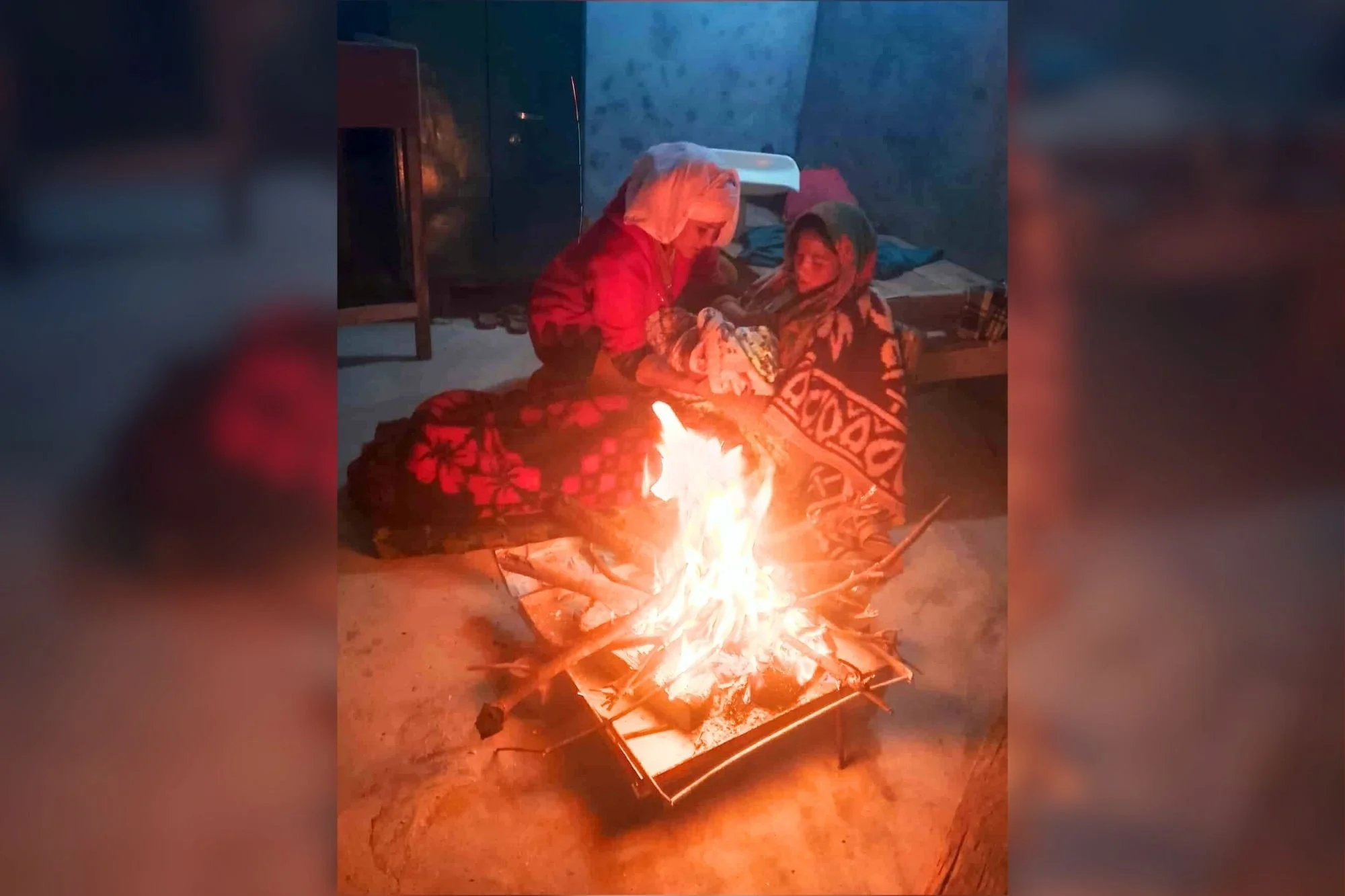
A new mother and her infant keeping warm by the fire inside Gorkhali Birthing Centre
Giving birth in winter
In the subalpine climate of Khaptadchhanna in West Nepal, the winters are marked by severe cold and dryness. For Asmita Singh, the only Nurse Midwife at the Gorkhali Birthing Centre, winter brings with it a whole new set of challenges.
The Gorkhali Birthing Centre was established in 2019 to be a lifeline for a catchment area of more than 2,400 people. As one of the most remote health posts in the region, electricity at Gorkhali was never guaranteed. Without an adequate heating system or reliable electricity, Asmita was often forced to burn wood inside the delivery room to keep mothers and newborns warm. While necessary at the time to keep the freezing temperatures at bay, this makeshift solution introduced significant fire hazards and exposed both mothers and newborns to dangerous smoke inhalation.
A need for infrastructure and training
Operating with three staff members, Asmita and two supervised support staff, the Gorkhali Birthing Centre struggled against the elements. Road access is extremely difficult, and the facility itself suffered from a leaking roof and the lack of reliable electricity made night-time deliveries even more challenging.
Despite her dedication, Asmita had not yet received Skilled Birth Attendant training, the clinical expertise required to manage emergency obstetric procedures and neonatal resuscitation. Without these life-saving skills to handle complications like haemorrhaging or obstructed labour, every delivery was a source of intense stress and risk. As a result, many families chose the high risk of home births instead.
Ensuring safer births
Working in coordination with our health partner Action for Nepal and the local government, our women’s health program was implemented to bridge the gap. Our approach was to strengthen the management of the health facility as well as improving its service delivery to ensure safety, trust and dignity.
Asmita received Skilled Birth Attendant Training alongside education in infection control, neonatal illness management and family planning. There was also an expansion of the Gramin Ultrasound Program, a government initiative to train local nurses and midwives to use portable ultrasound devices in remote health posts to detect high-risk pregnancies early. Regular onsite coaching and mentoring also ensured the new equipment and skills were used effectively at the birthing centre.
To combat the harsh winter conditions, roof leaks were repaired and new heaters installed at the facility that ran on both electricity and gas in the event of power outages. Solar power support was also installed, permanently eliminating the need for unsafe indoor wood fires.
A new chapter for the Gorkhali Birthing Centre
For Asmita, the transformation has been profound. “After receiving Skilled Birth Attendant training and the proper equipment, I feel confident to handle deliveries and manage complications. Mothers trust the service now, and I feel proud to serve my community.”
Today, the Gorkhali Birthing Centre stands as a testament to the impact of context-sensitive support. By combining technical training with targeted infrastructure, the facility has been transformed into a reliable and respected professional healthcare environment. Mothers can now deliver their babies with dignity in a safe, warm space with a trained midwife, where the dangerous practice of indoor wood fires is a thing of the past.
Our health programs in Nepal is funded by generous Australian Himalayan Foundation donors with support from the Australian Government through the Australian NGO Cooperation Program (ANCP).
Read more about our Health Programs.