Eco-bricks build skills, schools and health posts in West Nepal
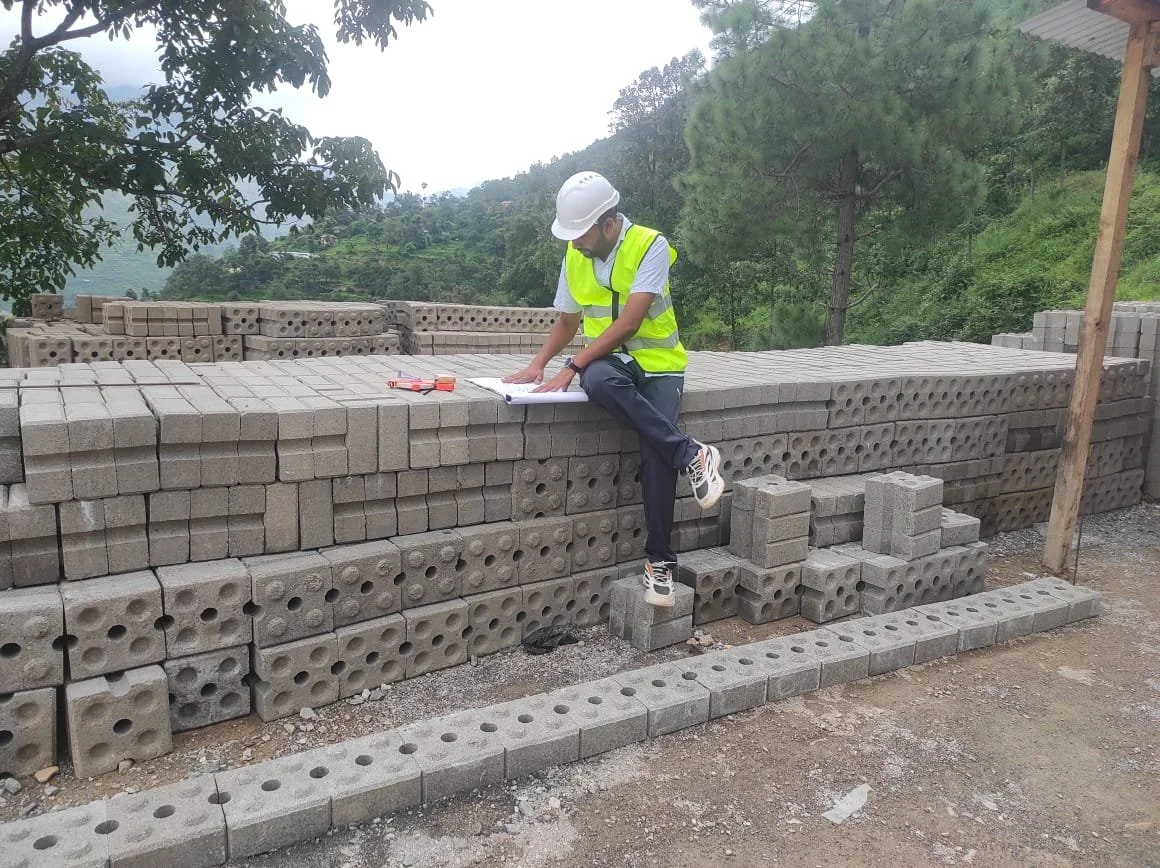
Project Engineer Satya with the cured Compressed Stabilised Earth Bricks (CSEB).
Building safer spaces in disaster-prone regions
In West Nepal, schools and health posts are essential for community life. They provide access to education, healthcare and safe spaces for people to come together. Yet in one of the world’s most disaster-prone regions, building and maintaining these facilities is a constant challenge. Earthquakes, floods, and ageing, poorly constructed buildings put students, teachers, patients and health workers at serious risk.
Over the past two years, the Australian Himalayan Foundation (AHF), together with local partners and Build up Nepal, has been transforming these spaces. Safer classrooms have been delivered at Durga Mahalinga Secondary School and construction is underway at the Lamtada Birthing Centre, both using Compressed Stabilised Earth Bricks (CSEBs) or “eco-bricks.” This innovative approach strengthens disaster resilience while supporting local skills, livelihoods and long-term opportunities.
Eco-bricks: a sustainable construction model for remote communities
Compressed Stabilised Earth Bricks (CSEBs), or eco-bricks, are an environmentally-friendly alternative to traditional fired bricks. Made from locally available soil and sand with just 7% cement, they are compressed in a manual or hydraulic press and cured with water, with no kiln required. Interlocked with steel rebar and seismic band support, these bricks form earthquake-resistant structures while reducing CO₂ emissions by 75% and air pollutants by 90% compared to traditional bricks.
Unlike traditional fired bricks, which rely on coal powered kilns which account for 36% of Nepal’s national CO₂ emissions from fossil fuels, eco-bricks can be produced locally. Using a decentralised village-based approach also lowers transportation costs and reduces the opportunity for common breakage on rough mountain roads.

Supervised mason training on mixing processes and using the brick press.
A school transformed
At Durga Mahalinga Secondary School, a school supported by our quality education program, students like Anusha* and Bibek* were learning in classrooms damaged by flooding and the 2023 Bajhang earthquake. In 2025, a new four-classroom block was completed using Compressed Stabilised Earth Brick technology.
Anusha and Bibek said the new classrooms were “beyond what they could have imagined” and believe the safer building might even encourage higher attendance, as students and parents have greater confidence in the school’s earthquake resilience.

Opening ceremony for the newly constructed Durga Mahalinga Secondary School classrooms.
Upskilling local masons
Our school and health construction projects also function as hands-on training sites for local builders. Santosh, a head mason with 15 years of experience in Khaptadchhanna, has learned new techniques including accurate brick levelling, correct mortar thickness and proper placement of steel reinforcement.
“I realised that without formal training, we had not considered earthquake risks in our traditional building methods. The masonry training provided me with critical knowledge on how to mitigate these risks. After receiving training, I feel more competent and motivated in my profession. The continuous supervision and guidance from engineers have strengthened our abilities and my team and I now feel confident constructing larger, more complex structures.”
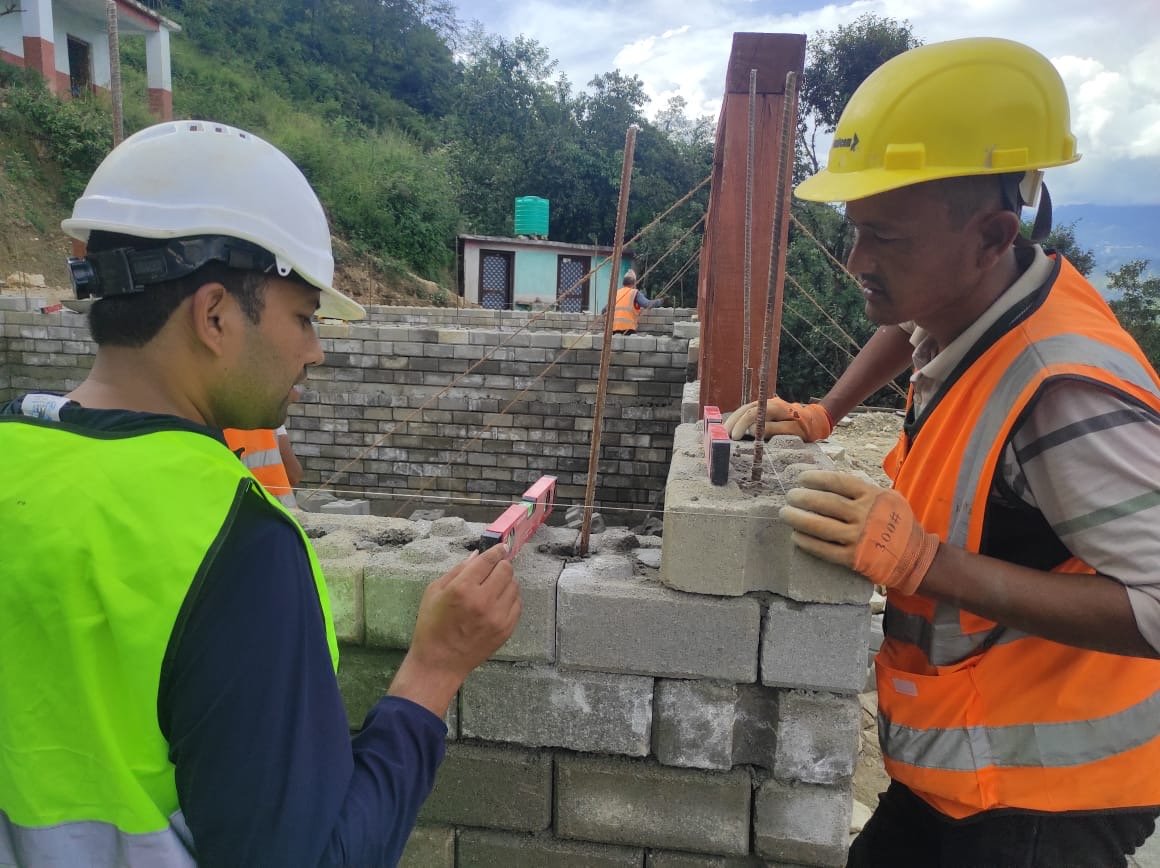
Head Mason Santosh (right) and Project Engineer Satya (left) inspect the level of the laid CSEB at Durga Mahalinga Secondary School.
Building change in Nepal
Eco-bricks are more than a construction material, they are a practical tool for long-term change. Through the Australian Himalayan Foundation’s project in Khaptadchhanna, West Nepal, these resilient, low-emissions buildings are creating safer, more inclusive spaces for learning and care. Built by local hands and designed to withstand disasters, they support better teaching, encourage school attendance and strengthen community confidence.
By combining innovative construction with skills development and ongoing education and health support, the Australian Himalayan Foundation is helping ensure these facilities remain strong, safe and valued for generations to come.
*Students' names have been changed to protect their identity.