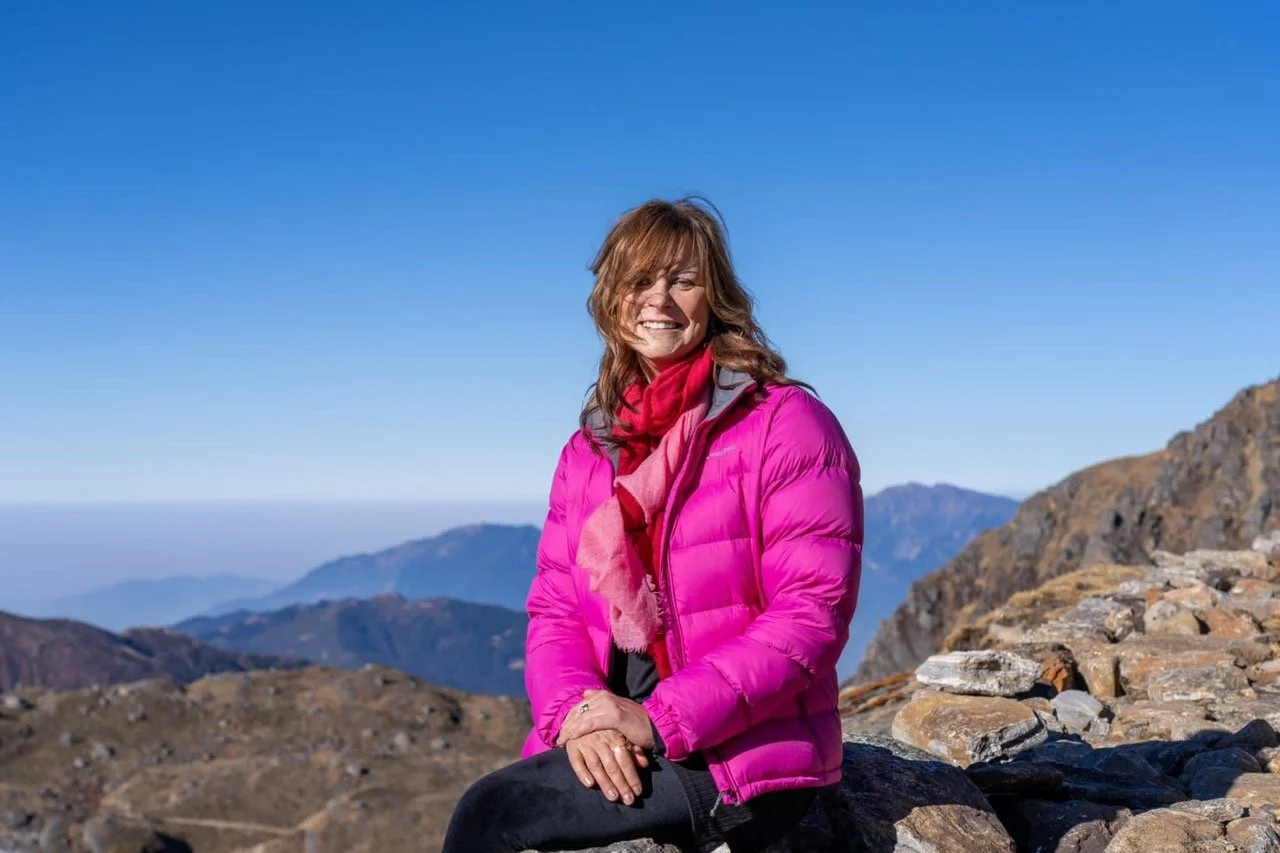
The Australian Himalayan Foundation is delighted to welcome Felicity Volk to its Board of Directors. With a distinguished near 40 year career in diplomacy, including her most recent post as Australian Ambassador to Nepal (2021-24), Felicity brings a wealth of experience in International Development, cross cultural engagement and advocacy for equity and inclusion. We sat down with her to talk about her passion for the Himalaya and her goals in joining AHF’s Board of Directors.
You’ve spent a lot of time in the Himalaya. What first drew you there, and what have been some of your most memorable experiences?
Serendipity brought me to the Himalaya. In 1986, I was on a gap year from my Arts/Law studies at the University of Queensland, backpacking through Asia. I had planned eventually to reach Germany where my boyfriend was studying. En route, I received a ‘Dear Jane’ letter from him, so I cancelled the European leg and instead spent that time in South Asia, including Nepal and Ladakh. Best break-up outcome ever! I discovered the place-and-people love of my life: the Himalaya and its communities. That love drew me back time and time again, most recently as Australia’s Ambassador to Nepal from 2021-24.
Over three years, I travelled the length and breadth of Nepal and spent time at international climate adaptation meetings in Bhutan. From the high mountains to the plains of this stunning part of the world, I have enjoyed a profound welcome by people for whom the adage, Atithi devo bhawa — guest is god — is a sacred practice. Of all the ways the Himalaya enchants, it is the kindness and hospitality of its peoples that are fixed in my heart and mind.
You’re planning to split your time between Australia and Nepal. Can you tell us a little more about your plans and what’s calling you back?
I’ve had a rewarding career as a diplomat for thirty-six years and been fortunate to work among a community of people devoted to encouraging a stable, secure and prosperous world for all. Now, it’s time for a change and I’m looking forward to the freedom to spend my days how and where I want. I’m carving out time for other passions – my writing career and my wish to make Nepal a second home, immersing myself in its special energy that weaves magic on so many of us, calling us back over and over again.
I’m a published novelist and have plans for a couple of books set in Nepal, so I’m returning to research and write, to immerse myself more deeply in Nepal’s culture and society. Most of all, I want to remain connected to my community of friends there and to contribute in practical ways to Nepal’s development.
What aspects of Nepali culture have stayed with you—any particular foods, traditions, art or ways of life that you carry with you?
Over many centuries, Nepal has occupied a unique role in its region as the epicentre of spiritual, artistic and therapeutic practices. Birthplace of Buddha; home to pilgrimage Hindu temples, Buddhist rinpoches and monastery schools that welcome students from around the globe; a place where artisans of ancient lineage working in metal, wood, stone and pottery continue their craft; Tibetan amchis and Ayurvedic doctors offering ancient healing practices and high altitude medicinal herbs; exceptionally talented musicians fusing folk traditions with contemporary; and more.
It’s hard to imagine how any visitor could leave Nepal unaffected by its traditions and culture. And certainly, I’ve carried a lot of Nepal with me. My house is a homage to Nepal’s arts and crafts. My favourite playlists include Nepali bands like 1974AD, Swar, John and the Locals, Kuma Sagar and the Kwopa. Meditation and yoga are staples of most days. And each morning begins with a medicinal Ayurvedic tea created for me by a Kathmandu-based practitioner.
In your time as Australian Ambassador to Nepal, what surprised you most about Nepal?
For a country which, in terms of both landmass and population, is quite small, Nepal has the most remarkable diversity of people, topography, climate, fauna and flora. Nepal’s population numbers around 30 million and you’d need more than 50 Nepals to make Australia, but Nepal is home to over 140 ethnicities and 120 languages are spoken across its high mountains, hill regions and plains.
Our countries are dramatically different in a number of ways: Nepal land-linked, Australia an island nation; Nepal living at such a high altitude it is known as the third pole, Australia living mostly at sea level. But we are similar too. We are both ancient cultures characterised by extraordinary variety. Both Australia and Nepal are at work to bring healing where there are historic wounds in our communities. Australia with its First Nations Peoples and Nepal with the victims of its Peoples War and marginalised communities. Both of us are walking a path towards justice and reconciliation and both Australia and Nepal are hard at work to cultivate our societies as places where our diversity is our strength.
Why do you think it’s important to give back to this region? What kinds of impacts have you seen firsthand?
As we look around us at a world fractured by politics, by war and heightened geopolitical tensions, by climate change and environmental devastation, by the threat of a global economic crisis, it can be hard not to give in to despair and frustration at what humans have unleashed on each other and on our planet. But against the backdrop of crisis everywhere we look – a crisis of existence and co-existence – there is incredibly positive change that can be achieved in places like Nepal, Bhutan and the Indian Himalaya. There is simple good that can be done by each one of us, especially working through organisations which have great local partners and a track record for accountability and sustainable development outcomes — organisations like the Australian Himalayan Foundation.
We know that the Himalaya plays a critical role in the wellbeing of the broader region. More than 1.6 billion people rely on water originating from the range, making the Himalaya a crucial water source. What happens in the Himalaya matters for all of us. The health of the so-called third pole and its local communities, who are the stewards of this important environment, has implications for the health of the planet. I have seen how modest interventions in education, health and climate resilience can effect enormous positive change for the people of the Himalaya and downstream communities.
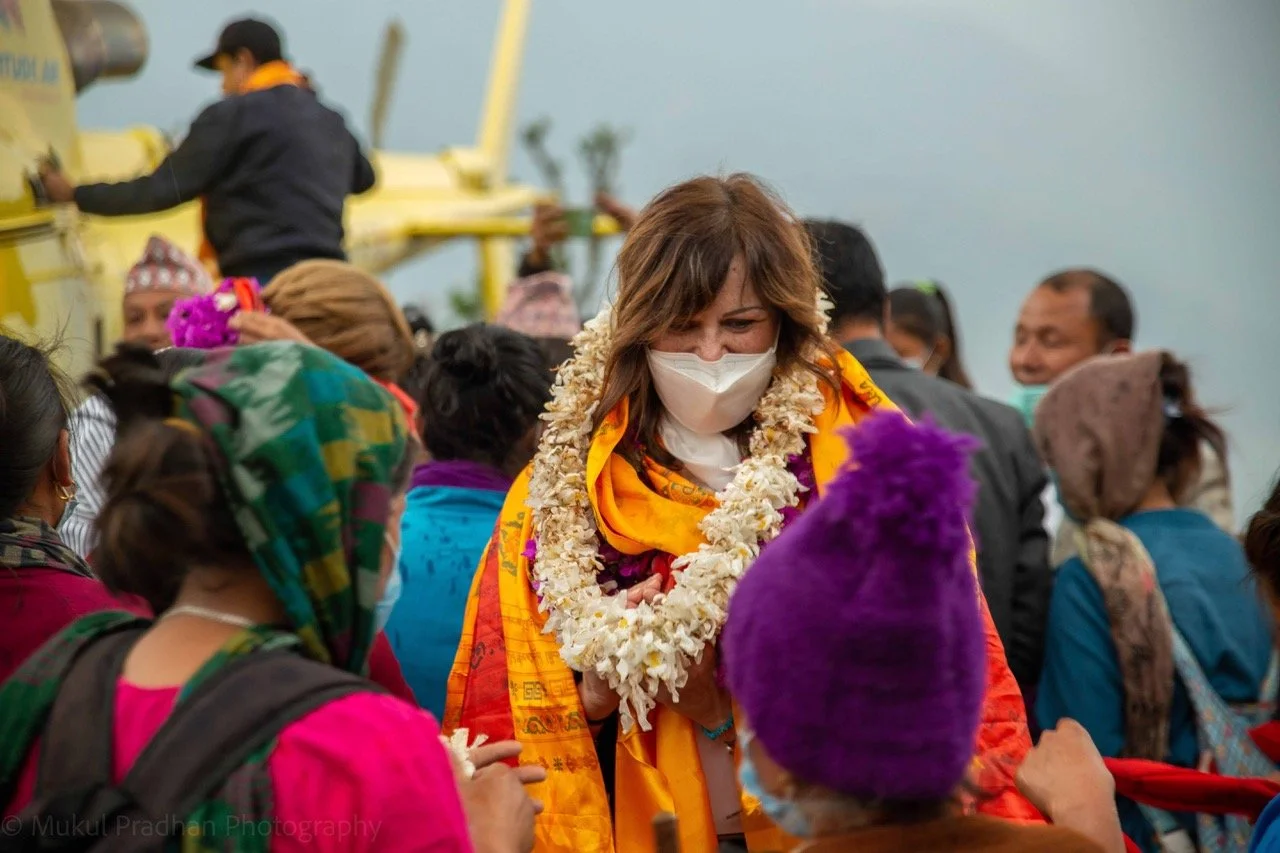
Felicity at the Waku Health Post in Solukhumbu, Nepal.
You’ve visited AHF programs on the ground in Nepal, what stood out to you? Any moments or stories you’d like to share?
My first field visit outside Kathmandu, within a couple of months of arriving in Nepal as Ambassador, was a trip to see an AHF supported project in the Everest region. AHF’s implementation partner, Action for Nepal, was delivering the construction of a health post in Waku municipality, where the nearest hospital required a three-day walk. I toured the building site and, in partially constructed rooms, talked to Female Community Health Volunteers about the life-saving services families would be able to access once they had a functioning health post with a birth centre.
Land for the health centre had been provided by the local youth society, timber came from the Waku Community Forest User Group, funding came from AHF and its supporters, from One Heart Worldwide, Action for Nepal and from the municipality and local residents. It was a powerful partnership and a demonstration of the way AHF harnesses the strengths of a range of parties so that the whole is, indeed, greater than the sum of its parts.
A year later, I went back to open the completed health post which was meeting the primary health needs of over 5000 people. Mothers were giving birth safely, children were receiving vaccinations, women and men were receiving health education and primary health care. It was remarkable progress in the space of a year.
There are growing Nepali and Bhutanese communities in Australia. What opportunities do you see for deeper cross-cultural connection or collaboration?
Australians are often surprised to discover that Nepalis comprise our fastest growing and ninth largest migrant community. Nepali is the third most commonly spoken language in Canberra, Hobart and Darwin. The Bhutanese community is similarly flourishing and shaping modern Australia. The human bridge between our countries is also one encouraged by the tens of thousands of Australian tourists who travel each year to the Himalaya.
The Nepali and Bhutanese diaspora communities are making an essential contribution to their new home — to Australia’s rich and diverse cultural life, to our economy, to community and health services, to politics. These stories need to be better known and understood in broader Australian society and I see immense opportunities to engage diaspora in the work of organisations like AHF, as well as artistic and cultural collaborations that celebrate both our different traditions and our shared outlook.
What inspired you to join the AHF Board?
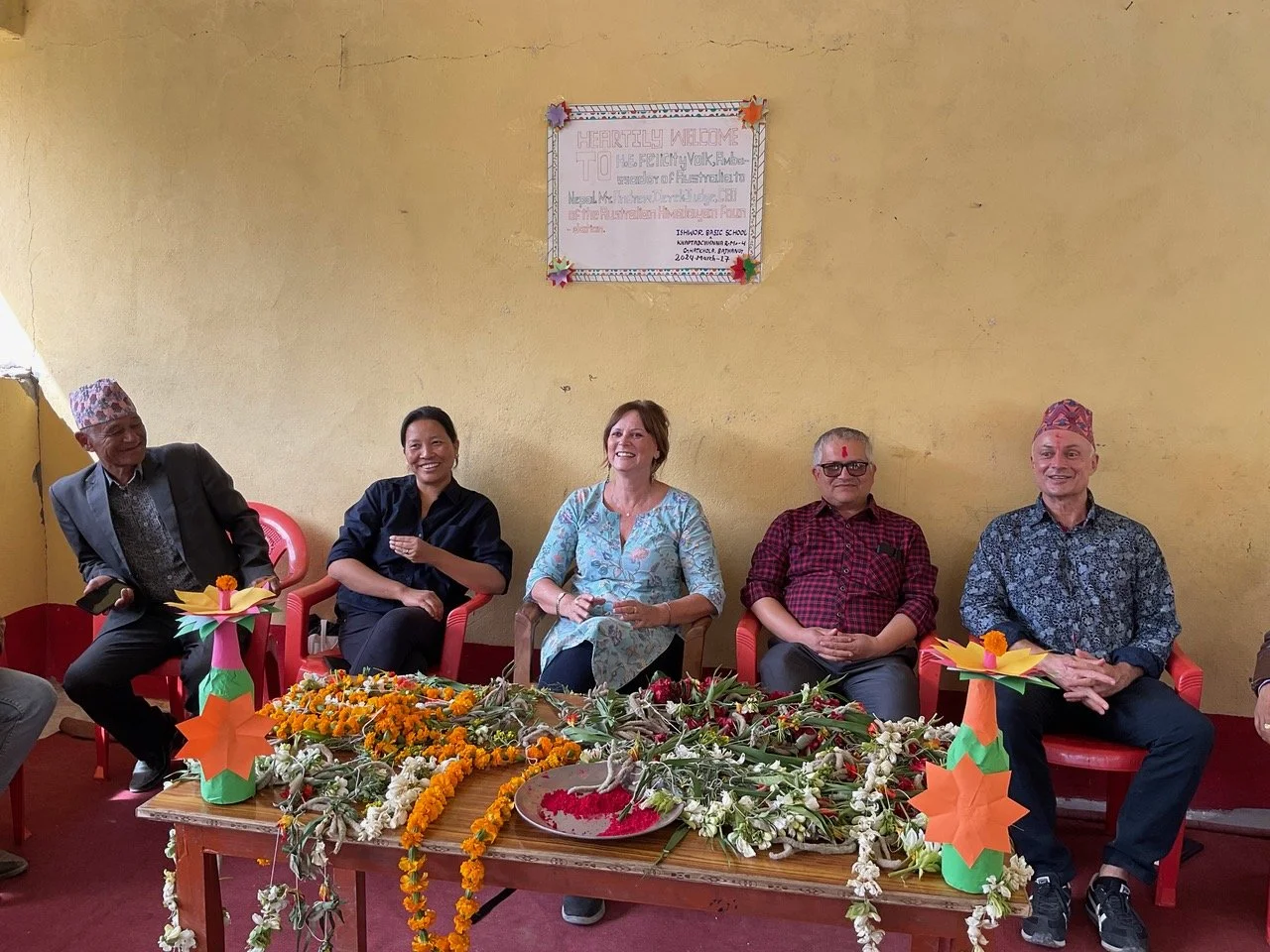
I’ve seen the immensely valuable work of AHF and its partners on the ground in places like Solukhumbu and Khaptad Chhanna, and I’m keen to join efforts to bring positive change and opportunity for remote communities. I’m also looking forward to supporting AHF’s cultural collaborations in the Himalaya; we know that cultural understanding underpins human connections in especially profound ways.
My engagement with AHF is an opportunity to do something positive and enduring in a time of global conflict and uncertainty. It’s an antidote to despair to be working towards a fairer, better world for all people. And it’s a way of remaining connected to a place and people with whom I have shared some of the most extraordinary experiences of my life.
Looking ahead, what do you hope to see AHF achieve in the future? What excites you most about what’s next?
AHF in 2025 is a mature, experienced and dynamic organisation. It’s an exciting time to be part of this community. In my first few weeks on the Board of Directors, I’ve already had the opportunity to engage with AHF’s efforts to: deliver telehealth services to remote communities; expand vital cooperation between Nepal and Australia on forest fire management programs; and explore avenues for cultural collaboration.
Social inclusion and sustainability are at the heart of AHF’s efforts, which is why, after more than 20 years of working beside Himalayan communities, the foundation is such a valued development partner at home and abroad.
Beyond AHF’s development projects, I’m so pleased to be involved in the work of an organisation that is fostering the kinds of connections between Australia and the Himalaya that are an example of what’s best about globalisation: respectful partnerships built on the principle that for any to prosper, all must prosper. Against the backdrop of a messy world, there’s a simple goodness to be found in supporting positive change in places like Nepal, Bhutan and Ladakh, where carefully targeted contributions are transformative across generations.
About Felicity Volk
Joining the Department of Foreign Affairs and Trade (DFAT) in 1989, Felicity completed postings in Bangladesh, Laos and Nepal as well as roles in Canberra. She ran the office of Australia's Global Ambassador for Women and Girls and the Secretariat for the New Colombo Plan, sending ten thousand Australian undergraduates to the Indo-Pacific each year for work experience and immersive study. Outside of her work as a diplomat, Felicity is a published novelist, a creative passion shaping her days since retirement as well as spending time with her two daughters.