Two decades of supporting better education in Nepal
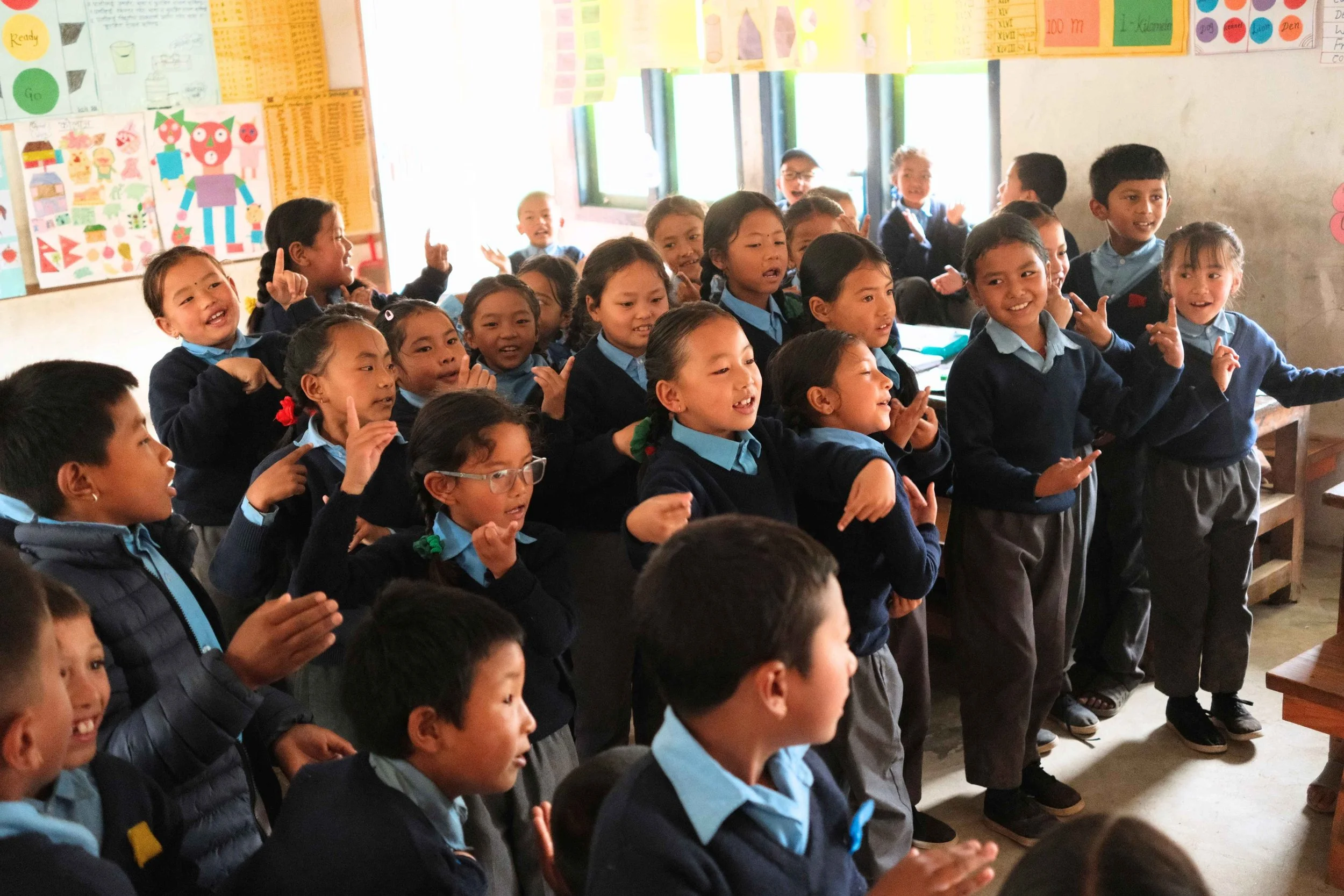
Since 2005 the Australian Himalayan Foundation has worked alongside our long-standing education partner REED Nepal to improve the quality of teaching and learning in some of the country’s most remote mountain communities. What began as a small, community-driven initiative inspired by Sir Edmund Hillary’s vision has evolved into a nationally recognised model for quality education.
As the Australian Himalayan Foundation marks its 20-year milestone, we reflect on two decades of advancing education and opportunity for children across Nepal.
AHF Founding Director, Garry Weare shares, “On my first comprehensive field survey with Bhim Bogati from REED Nepal we laid the groundwork for what would become our flagship education program. A day’s trek south of Lukla we met four young girls, no older than their early teens, carrying heavy baskets of produce to sell at the Namche Bazaar markets. They had already been walking for two days and still had another to go. I remember thinking that the only load those girls should carry is a school bag.
A few days later in Bung village we visited a school where more than a hundred students were packed into a bare classroom with one teacher and almost no materials. It was clear that training, resources and scholarships were urgently needed. Yet even then I was inspired by the teachers’ commitment to walking for days to attend training, by women eager to learn English and by schools doing their best with what little they had.
Since those early days, our quality education program has been recognised with multiple awards from the Nepal government, a sure indication that we are on the right path as we continue working to improve education in Nepal’s remote mountain communities.”
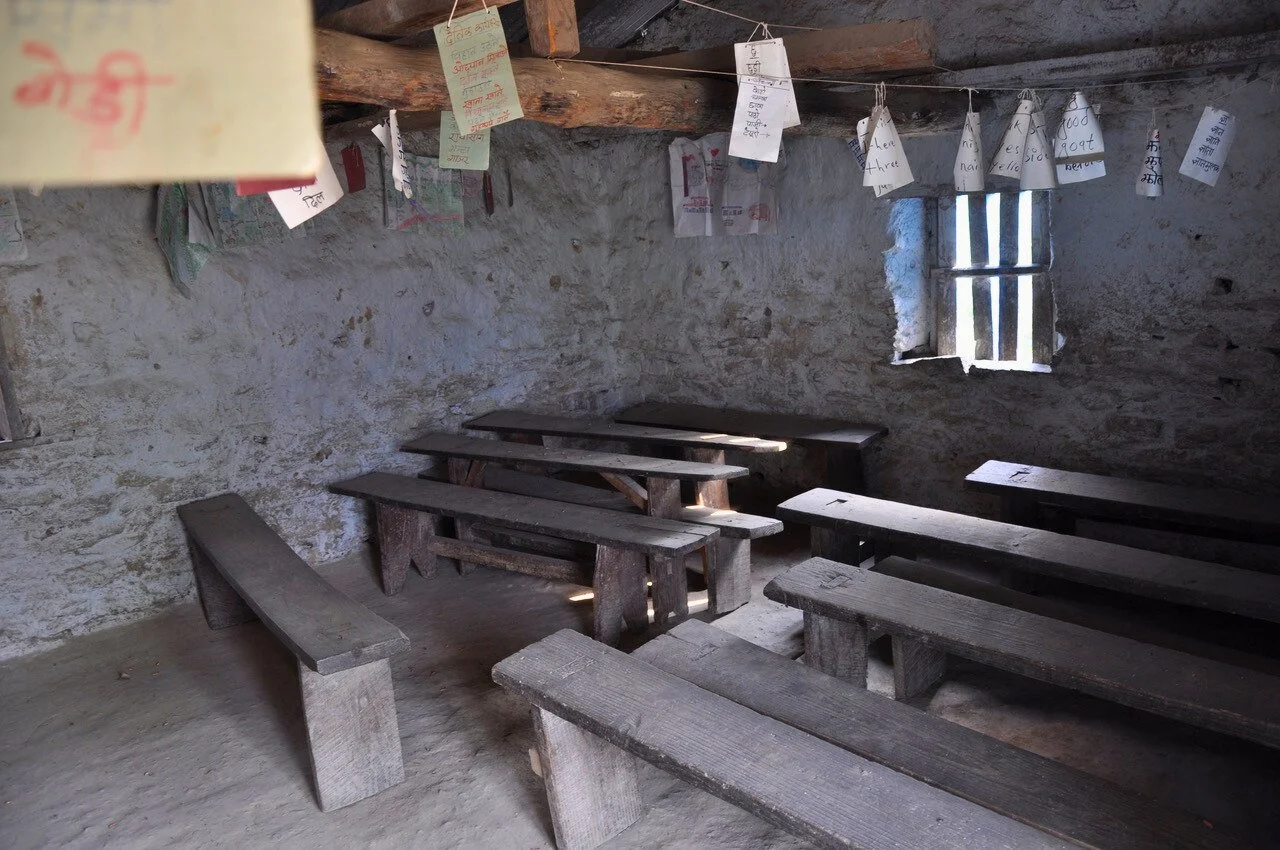
School classroom in Bung (2010)
AHF’s education milestones
2005 | Launched AHF’s flagship education program
Following in Sir Edmund Hillary’s footsteps, AHF launched the Teacher Training & Quality Education program in Nepal’s Everest region with REED Nepal. The program strengthened teacher capacity and improved classroom learning, becoming a national model for quality education.
2008 | Expanded our education program to lower Solukhumbu
Building on early success, AHF extended the program to lower Solukhumbu, reaching over 300 schools. This expansion drove significant improvements in primary school attendance, girls’ enrolment, and student retention through to secondary education.
2012 | Received Australian Government support
The Teacher Training & Quality Education program began receiving support from the Australian Government through the Australian NGO Cooperation Program (ANCP), and continues to do so today.
2015 | Rebuilt after the earthquake
When the 2015 earthquake damaged over 200 AHF-supported schools, AHF responded immediately with emergency relief and launched the Build Nepal Back Better Appeal, raising $1.3 million to rebuild classrooms and restore learning spaces.
2020 | Launched distance learning during Covid-19
As schools closed during the pandemic, AHF and REED Nepal pioneered School of the Air, radio-based lessons that reached an estimated 1.2 million primary school students.
2022 | Expanded our education program to West Nepal
AHF launched our quality education program in Khaptadchhanna, with a renewed focus on gender equality, inclusion, child safeguarding and mental health, bringing transformative education to even more remote communities.
“I believe in the power of education to strengthen remote Himalayan communities, helping them expand their horizons and navigate the challenges of our rapidly-changing world. Education is at the heart of the Australian Himalayan Foundation’s impact. My father’s greatest commitment to the people of the Himalaya was ensuring the continuity of education programs, a commitment that remains central to the AHF’s work today.”

Kamala, an English & Nepali teacher at Chochmi Basic School (2024)
Our impact on education in Nepal
The Australian Himalayan Foundation currently supports quality and inclusive education for children in 100 schools in lower Solukhumbu and 37 schools in Khaptadchhanna, West Nepal. Our programs strengthen teaching, school leadership and local governance, encourage parental involvement and promote child-friendly inclusive learning environments. To ensure no child is left behind, we provide essential school supplies to students at risk of dropping out, easing financial pressures on families and helping children stay in school. We also renovate schools where classrooms are unsafe or lack proper lighting and sanitation, improving infrastructure and WASH facilities to create safer, healthier and more supportive spaces for learning.
Highlights include:
317 schools in Solukhumbu and Khaptadchhanna have been supported through our Teacher Training & Quality Inclusive Education program, which strengthens school governance, delivers teacher training, provides classroom resources and furniture and supports vulnerable students.
5,284 teacher training and mentoring opportunities have been provided (including to 2,528 women, and 57 teachers with disabilities), supporting teachers like Khagya.
4,793 scholarships have helped 720 at-risk students like Mina continue their education through our Going to School Support initiative (since 2013).
11,850 parents and school stakeholders (8,021 women and 40 people with disabilities) have participated in awareness sessions on the importance of education (since 2015).
35 Temporary Learning Centres have been constructed (30 in Solukhumbu and 5 in West Nepal) to ensure children could continue learning after earthquakes.
107 classrooms in 43 schools like Durga Mahalinga Secondary School have been renovated or rebuilt, creating safer, more child-friendly learning environments, including following the 2015 and 2023 earthquakes.
1.2M estimated students reached via School of the Air radio broadcasts during Covid-19.
137 schools and 8 local governments have been trained in safeguarding and in gender equality, disability and social inclusion (GEDSI), and supported to embed these actions in their policies and plans.
137 School Management Committees and Parent Teacher Associations have received training in school governance and inclusive leadership.
13,000+ students on average directly or indirectly supported by our education programs per year.
“For two decades the Australian Himalayan Foundation and REED Nepal have walked hand in hand to transform education in the heart of the Himalaya. From inclusive teacher training to empowering communities, safeguarding children and supporting students with disabilities, our partnership has touched thousands of lives in Solukhumbu and Khaptadchhanna. This milestone is a testament to the power of collaboration, resilience and shared vision. As we celebrate 20 years of impact, we reaffirm our commitment to nurturing quality education and brighter futures for every child in these regions.”
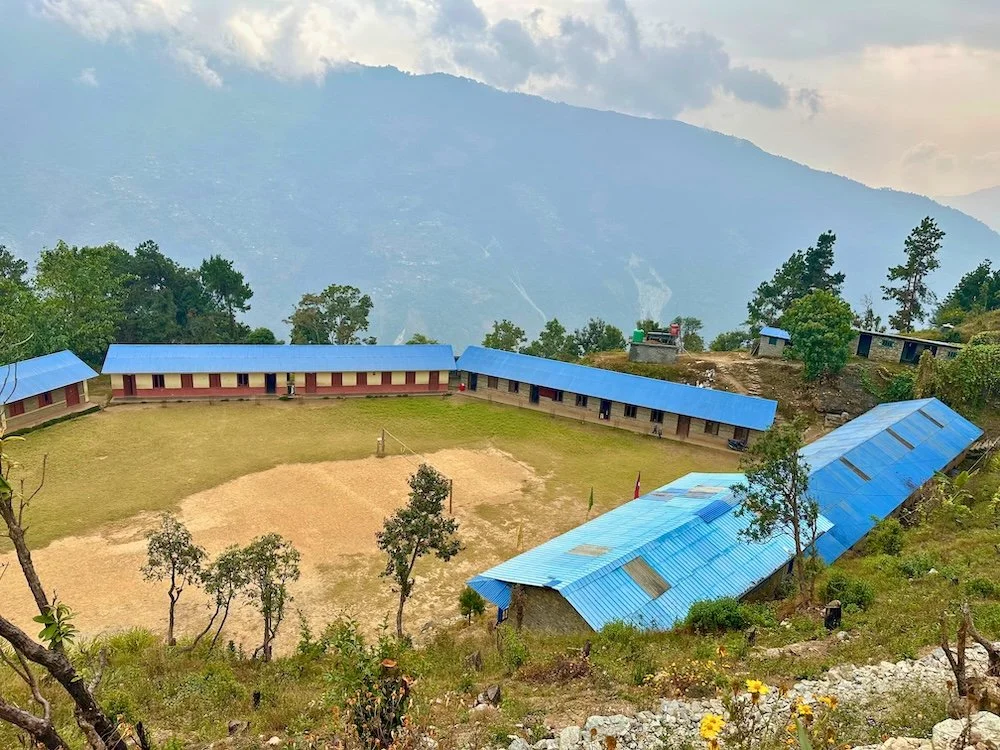
Basakhali Basic School in the lower Solukhumbu
How education has improved in Nepal over 20 years
Over the past twenty years, Nepal’s education system has been transformed, with more children than ever attending school and significant progress being made for girls and vulnerable groups. Primary enrolment has risen to around 96–97%, while secondary participation has grown from 48% to 80%, reflecting both broader access and improved gender equity.
These gains have been supported by strong policy frameworks and local engagement. Sector-wide plans such as the School Sector Development Plan 2016–23 and the School Education Sector Plan 2021–30, along with the 2015 Constitution’s decentralisation of education governance, have empowered communities to shape their schools and improve learning opportunities.
At the same time, challenges remain. Many students still struggle with basic literacy and numeracy, and children from poorer families often achieve lower outcomes than wealthier peers. Infrastructure in many schools is inadequate, with buildings that are unsafe or not designed to support effective learning. While access to education has greatly improved, more work is needed to ensure that every child in Nepal can learn in a safe, supportive, and high-quality environment.
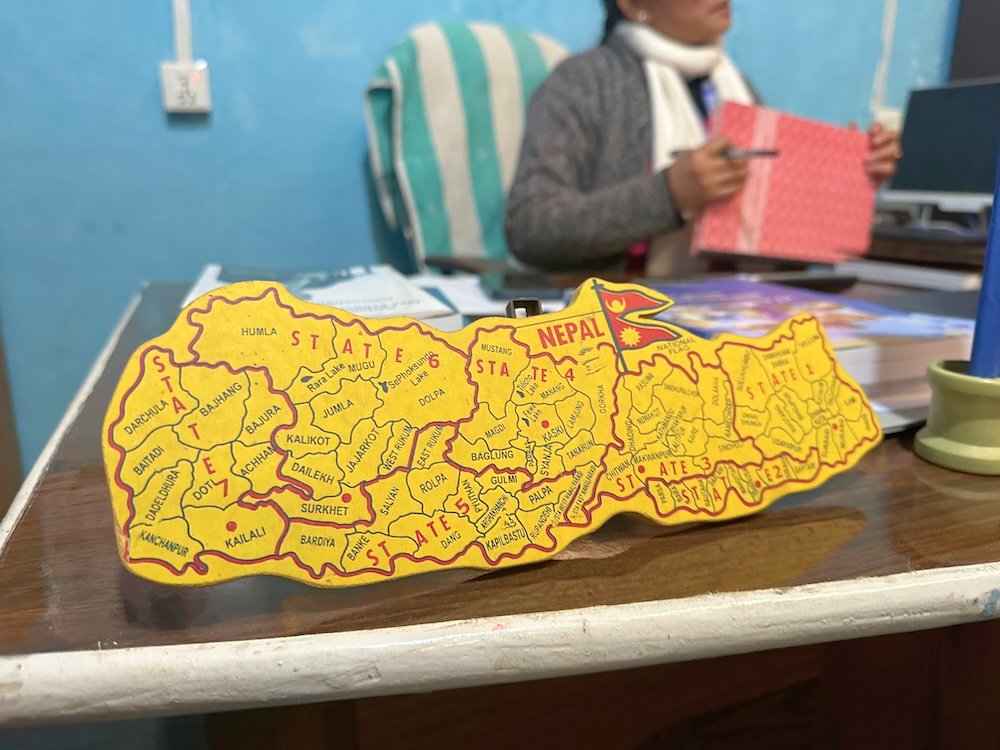
Head Teacher Debi’s office at Himalaya Secondary School
Looking to the future
As AHF marks 20 years of impact, our focus remains on ensuring that every child, regardless of gender, ability or geography, has access to quality inclusive education. Together with REED Nepal and the communities we serve, we look forward to the next 20 years of learning, growth and opportunity in the Himalayas.
Looking ahead, we are excited to build on the progress of the last two decades, while recognising that there is still much work to do. Our priority remains supporting teachers, strengthening schools and empowering communities so that every child can thrive in a safe, inclusive and inspiring learning environment. We are committed to driving further progress and creating better educational opportunities and outcomes for the next generation of children across Nepal.
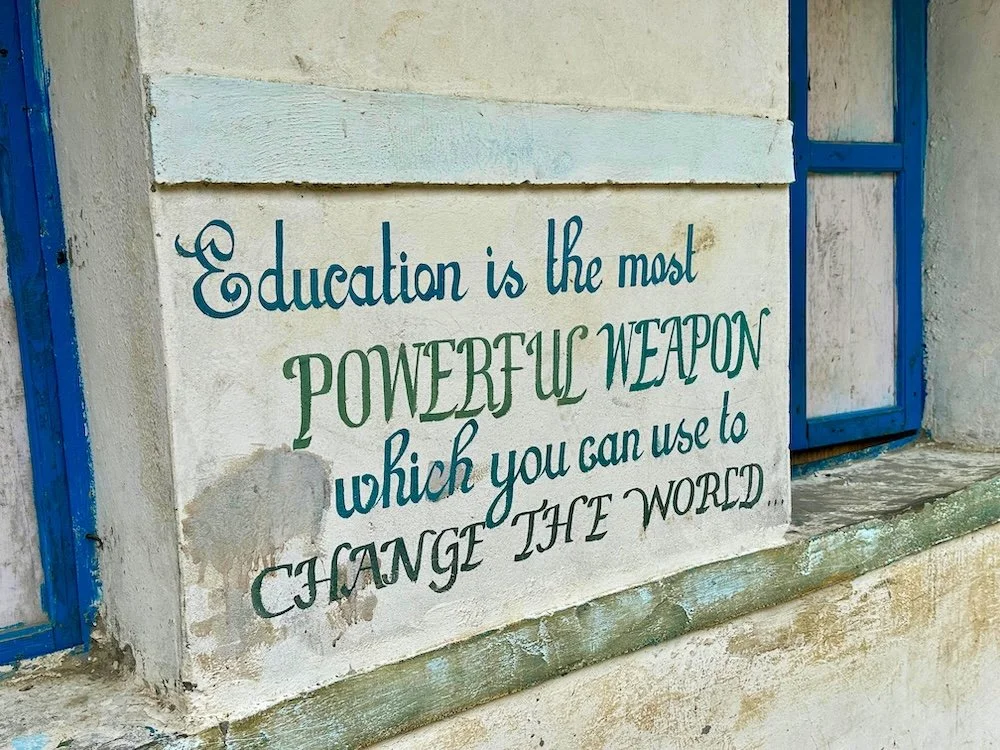
Mural at Padma Kanya Basic School