
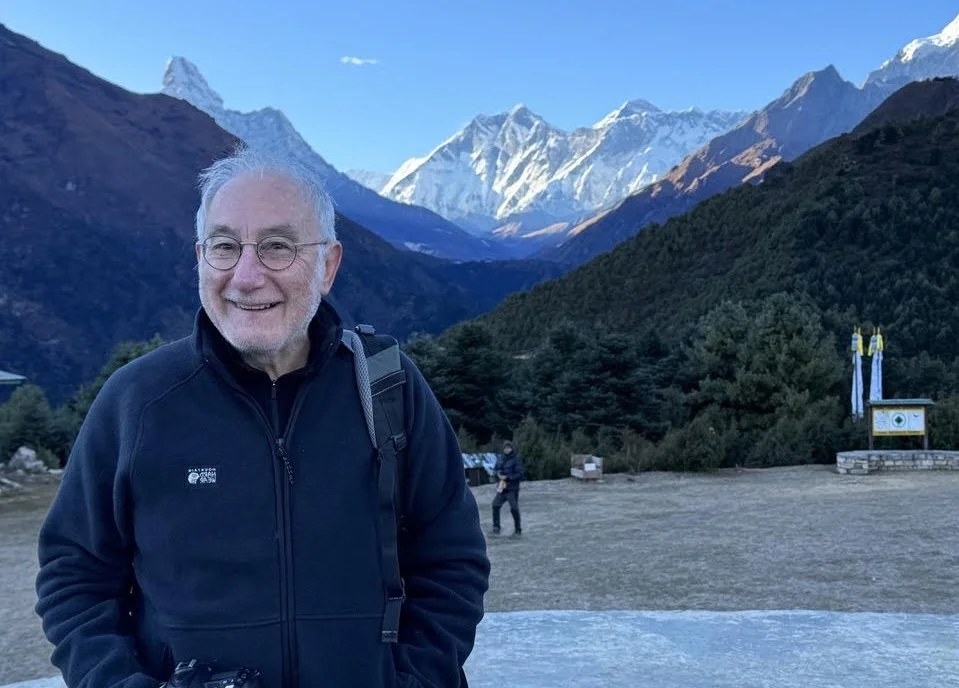
December 10, 2026, marks 25 years since a group of friends met at the Bundanoon Pub to plan what would become the Australian Himalayan Foundation. Just six weeks later, on February 8, 2002, the foundation was officially registered and launched.
To mark this milestone, we spoke with AHF Founding Director Garry Weare, whose incredible commitment and energy continue to shape the foundation today.
Garry takes us back to where it all began, sharing pivotal moments from the past 25 years and his hopes for the future of the Australian Himalayan Foundation.
Garry, take us back to the very beginning. What first drew you to the Himalaya and what was the spark that led you to the formation of the Australian Himalayan Foundation?
The year after I graduated from university in the UK, an opportunity arose in 1970 to visit Kashmir. While staying on one of the famous houseboats, I was invited to join a short trek. That experience inspired me to head to Nepal, where I spent five months trekking through the Helambu, Everest and Annapurna regions. It was a complete revelation. After returning to the UK, I organized my first commercial trek from Kashmir to Ladakh in 1973. However, realizing I needed some financial security, I travelled to Australia and worked in Eneabba, WA (in mineral sands) and Darwin to save enough money to continue organising and leading small groups in Kashmir.
My fortunes changed in 1977 when I met Christine Gee and Goronwy Price, the co-founders of Australian Himalayan Expeditions. They were organizing treks in Nepal and invited me to do the same in Kashmir. When the business evolved into World Expeditions, I continued to pursue my enviable lifestyle until the political situation in Kashmir erupted in 1990.
I then returned to Australia, working for World Expeditions as a full-time director and ‘Himalayan guru’ until 1997. It was around that time that I met Peter Hillary, and the idea of forming an Australian-based organisation to support the people of the Himalaya was first mooted.
Trekking is a common thread that binds the Australian Himalayan Foundation's supporters, community and founders. Has trekking always been a part of your life? Why do you think it serves such a catalyst for connecting people in relation to AHF?
Actually, I never considered myself an outdoors person until I trekked in Kashmir and Nepal in 1970. At the time, trekking was in its infancy, yet within a decade it featured on the wish list of many thousands of Australians. While trekking, many agree that you head to the Himalaya to see the mountains, but the most memorable experiences are those shared with the local people. As a result, many Australians have forged a lasting bond, not just with the renowned Sherpa people in the Everest region, but with many other communities that live beneath the shadow of the Himalaya.
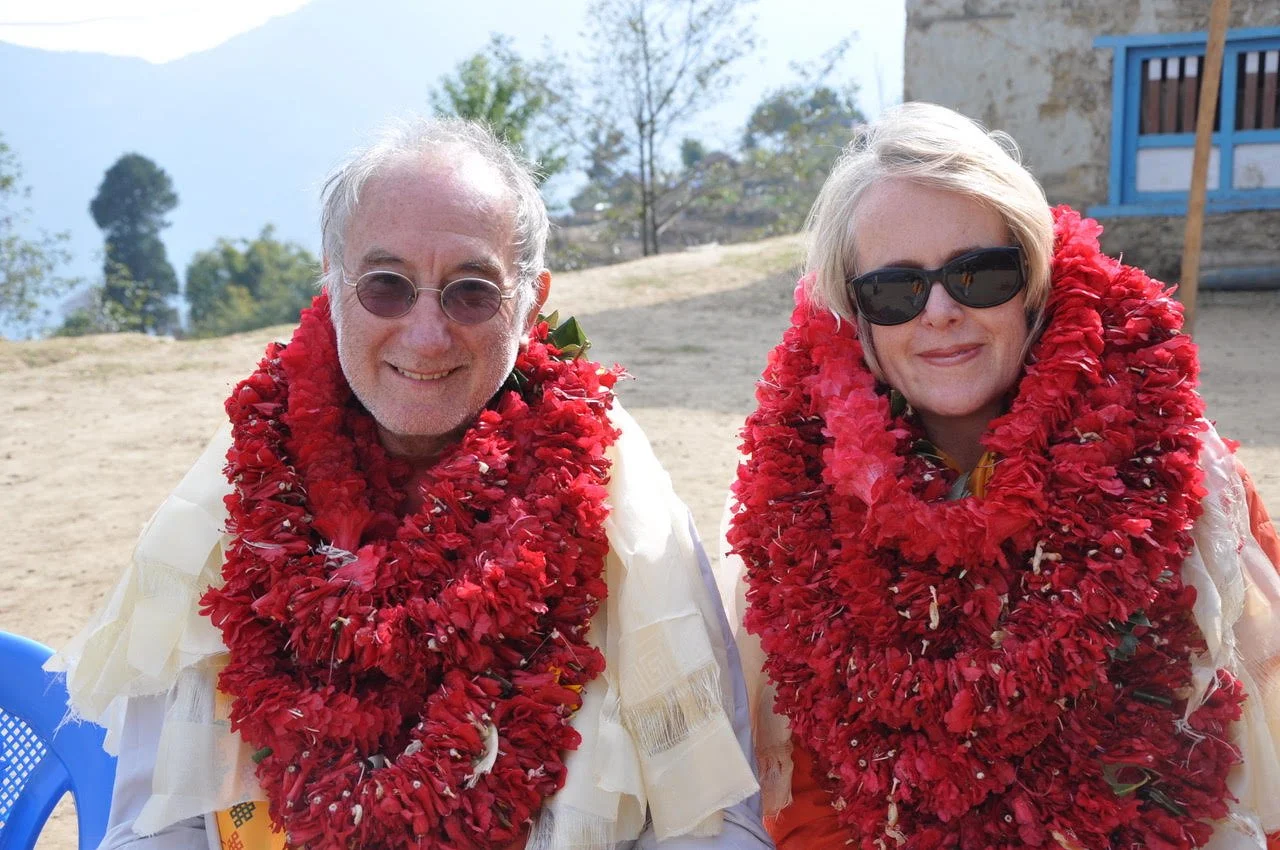
What was the exact tipping point that turned the idea for AHF into reality?
The tipping point for the Australian Himalayan Foundation was my friendship with Peter Hillary. When Peter visited Sydney, he stayed with me. Among our points of conversation was the incredible life of his father, Edmund Hillary, and his philanthropic work through the Himalayan Trust in New Zealand. I tentatively proposed to Peter that Sir Ed might consider the formation of the Himalayan Trust (Australia). However, we ultimately decided to create a new, independent organisation like the American Himalayan Foundation had done, and support programs not just in the Sherpa heartland of the Everest region, but also in other Himalayan regions such as Ladakh in India, Bhutan and other communities across Nepal.
When the Australian Himalayan Foundation was first launched, what was the ultimate vision? Did you ever imagine back then that the foundation would grow to this scale and sustain its impact for a quarter of a century?
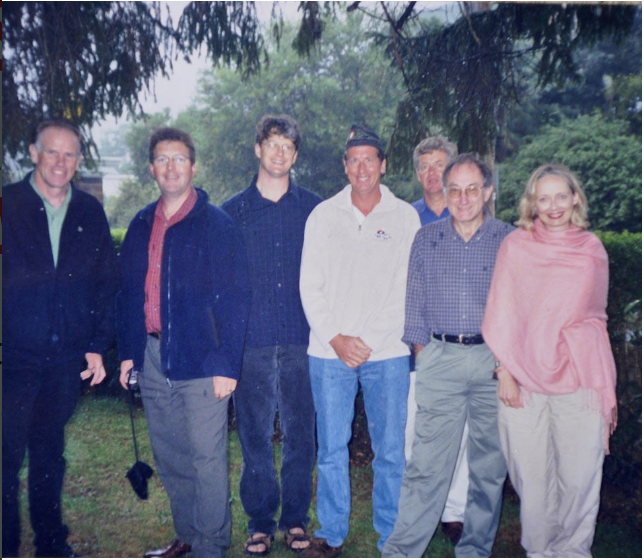
From the very beginning, the Australian Himalayan Foundation’s vision was to support the people of the Himalaya to achieve their goals. However, while the early AHF Board was high on enthusiasm, we lacked formal development expertise. Nevertheless, the vital seeds were sown, and seeing the impact of the Himalayan Trust New Zealand, the Himalayan Trust UK and the American Himalayan Foundation left no doubt that we were building something for the long term.
With 25 years of history, you must have an incredible library of memories. Are there any particular stories, anecdotes or stand-out moments from your project visits that capture how much life has changed in the region?
After Sir Ed died in January 2008, the AHF Board made a commitment to transition our support from the Sherpa communities in the upper Solukhumbu (Everest region) to the impoverished communities of the lower Solukhumbu.
My first field trip there was a real eye-opener. As we headed into the lower Solukhumbu, we met four young girls, not even in their teens, who were carrying heavy loads up to the Saturday market at Namche Bazaar to help support their families. They had already been walking for two days, with another day still to go. I remember thinking that the only load those girls should be carrying is a school bag.
A few days later in Bung village, I visited a school where more than a hundred students were packed into a bare classroom with one teacher and almost no materials. It was clear that training, resources and scholarships were urgently needed. Yet even then, I was deeply inspired—by the teachers’ commitment to walking for days to attend training, by local women eager to learn English and by schools doing their absolute best with what little they had.
Ultimately, those initial insights laid the essential groundwork for AHF’s programs, establishing a legacy of partnership and progress that endures 25 years on.
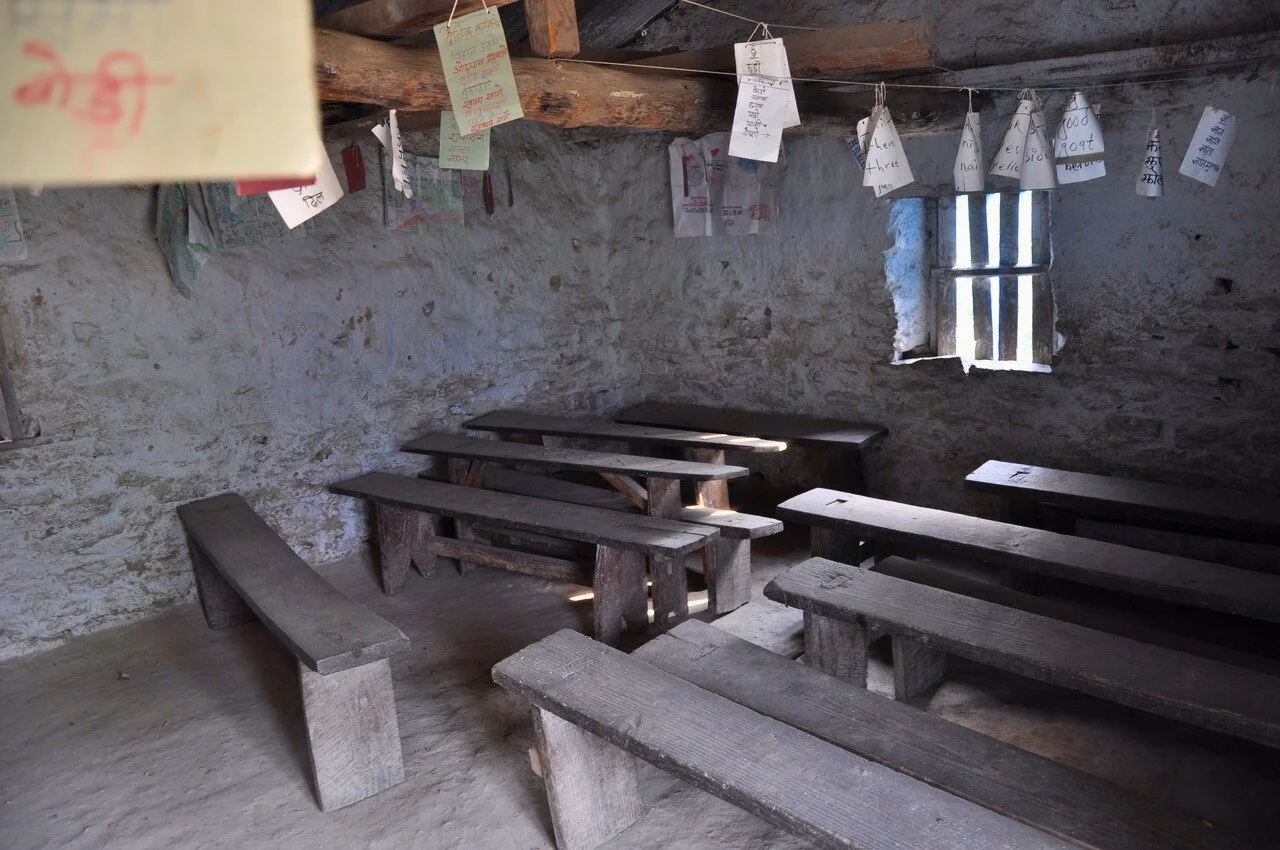
Classroom in Bung (2010)
As a Himalayan expert who has spent decades writing about and trekking through these landscapes, what is the one thing you wish the broader public truly understood about the realities of living in these remote communities?
I have always maintained that trekking in the Himalaya is not a one-way street, we can learn so much from the local communities. What I wish the broader public truly understood is just how fragile their daily lives are, living among those majestic mountain landscapes. Living in the Third Pole, these remote communities face deep geographic challenges and are on the frontlines of climate change—truly vulnerable in ways we are only beginning to understand, as seen with the recent catastrophic floods in Nepal (2026). Exposed to the constant threat of natural disasters, including devastating earthquakes, floods and fires, they bear the brunt of an unpredictable environment far removed from the safety nets and infrastructure many of us take for granted. Supporting these families isn't about charity, it is about standing in solidarity with the people on the frontlines of a shared global challenge, recognising that we are all in this together.
You’ve previously said that: 'While trekkers want to visit remote villages, remote villagers want access to roads.' How do you balance respecting a community’s right to modern infrastructure and connectivity with helping them preserve their rich cultural identity and traditions?
Supporting communities to help preserve their cultural identity has presented ongoing challenges for decades. The upsurge in trekkers visiting remote regions, the introduction of electricity, the influence of radio and TV, and more recently the arrival of social media and connectivity have all changed how these communities view their heritage. Road development is a further factor compounding this shift, for while 'trekkers want to visit remote villages, remote villagers want roads', and understandably so, as communities appreciate ready access to essential goods and services.
There is no easy answer, but the balance comes down to self-determination. It isn't about choosing between progress and tradition, it’s about community leadership. Rather than imposing outside ideas of what should be preserved, AHF works alongside local leaders and organisations, respecting their right to modern services while supporting communities to make their own informed choices, keeping their culture, language and traditions strong on their own terms.
Over the last 25 years, AHF has survived international funding shifts, political instability, devastating earthquakes and economic crises. How has the foundation managed to navigate all of this and remain resilient?
Securing sustainable funding presents ongoing challenges for any development agency. AHF focuses on forging deep, lasting relationships with donors (never taking their generosity for granted), designing innovative fundraising initiatives like our supporter treks (which leverage our deep expertise in the region) and maintaining long-term funding support from the Australian Government.
Notably, AHF is one of the smallest non-government organisations to achieve full DFAT accreditation. While this requires navigating rigorous compliance and reporting processes to ensure every taxpayer dollar reaches its intended purpose, it reflects our high standards of governance. Ultimately, our resilience relies on forward-thinking management that ensures we always maintain the financial security required to sustain our long-term programs.
A quarter of a century is a massive personal commitment. What has kept your personal fire burning for the Australian Himalayan Foundation all these years, and when you look back at the journey so far, what are you most proud of?
I still pinch myself at what the Australian Himalayan Foundation has achieved, growing from humble origins into one of Australia’s foremost development agencies in the Himalaya. I am particularly proud of how our quality education program in the lower Solukhumbu built the foundation for our broader work, driving so many life-changing outcomes. It positions us in remarkably good stead for the future.
As you look ahead, what are your biggest hopes for the future of AHF? What upcoming projects or shifts are you most looking forward to or excited by?
The Australian Himalayan Foundation has the momentum to secure an impressive future over the next 25 years. Our long-term strategy remains flexible enough to adapt to a rapidly changing environment. Our flagship education program, refined in alignment with government policies and community expectations, is complemented by robust health programs across our regions we work in. Our environment work focuses on community fire management and adds a vital new dimension to our program portfolio. It has already been cited by DFAT as one of the most innovative and dynamic initiatives in Nepal, with potential for future expansion into Bhutan and India.
In the world of international development, what does 'job done' look like to you? Does that ultimate end game still align with the core mission you set out with 25 years ago?
The overriding aim of our program strategy is to ensure that the local Himalayan communities we partner with are fully empowered to adapt and respond to future challenges. That is surely the ultimate endgame of overseas development—to build self-reliance so that our support is no longer needed. Twenty-five years on, that vision remains every bit as central to our mission as the day we began.