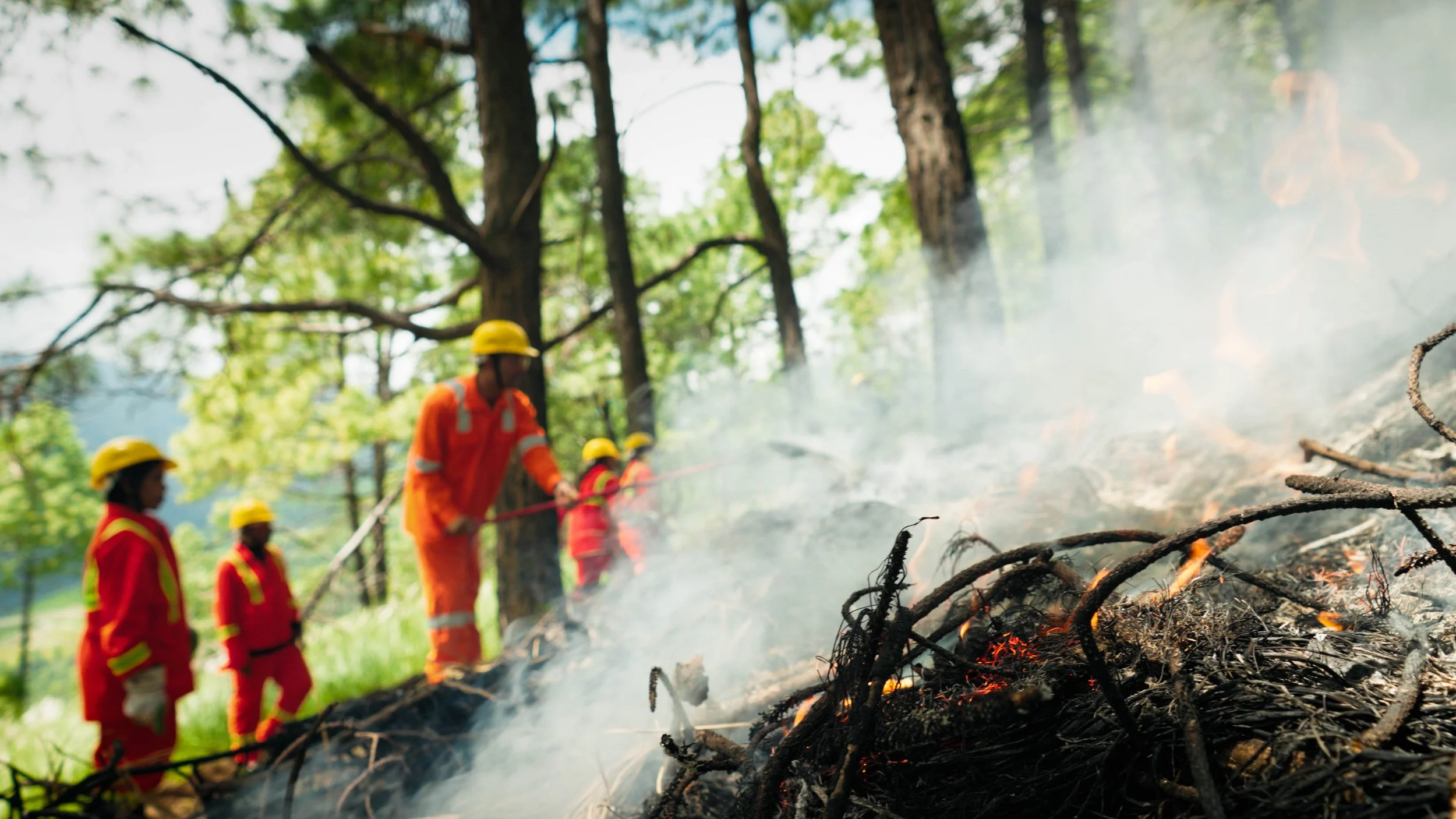
A fire response training session held in Sindhupalchok, Nepal.
In Nepal, forests have long been the lifeblood of local communities. They provide essential resources like grasses for livestock feed, firewood and medicinal plants. In recent years however, these vital ecosystems have faced an unprecedented threat, a surge in devastating forest fires fueled by a changing climate and human activity. In 2024 alone, Nepal (which is 44% forested) recorded over 4,500 forest fires incidents, a sharp rise that is endangering the lives, livelihoods and precious biodiversity of the region.
On the frontline of these fires are the Community Forest User Groups. These community-led groups are self formed in coordination with District Forest Office’s as households dependent on a nearby forest. They are responsible for the management, protection and sustainable use of designated forests across Nepal. They are mobilised as primary first responders to forest fires and escalate incidents to regional authorities when necessary. For members like Resham from the Banjhe Kapase Community Forest User Group, forest fire prevention and management has come a long way thanks to targeted training and community-led intervention.
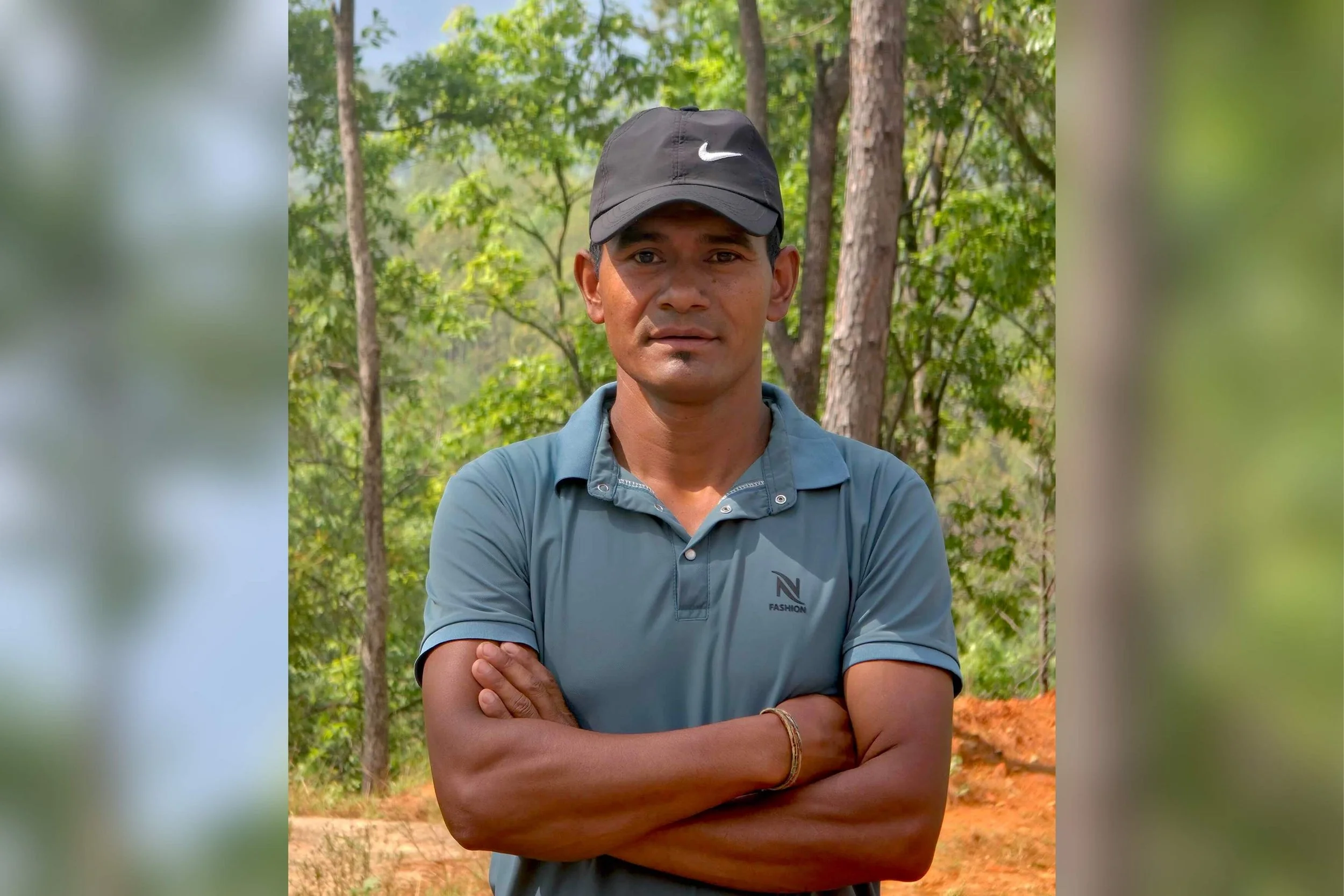
Resham, Secretary of the Banjhe Kapase Community Forest Users Group
“When I look back now, I realise how different everything used to be. Before this initiative started in our forest, many of us only knew that forest fires were dangerous, but we did not truly understand how our response was putting our lives at risk.”
For Resham, organising his Community Forest User Group was once a challenge. Following the 2015 earthquake in Nepal, other priorities meant that community participation in forest management activity was weak. A lack of education into the importance of mitigation strategies for fire resulted in meetings only occurring once a year.
“People were not interested in preventative forest management activities. Most of us had never even handled proper forest fire response tools before. Whenever fire broke out, we rushed into the forest without proper knowledge, without safety equipment and without any preparation. At that time, we thought putting out the fire was enough. We never thought about our own safety.”
In partnership with ForestAction Nepal, the Australian Himalayan Foundation launched a pilot project to strengthen community-led forest fire prevention and response. This initiative supports communities and local governments to safely and effectively respond to, and minimise the impacts of forest fires to protect their people, forests and livelihoods
Through specialised training sessions, community members learned how to prevent and respond to forest fires including how to reduce fuel loads, fire behaviour and practical response techniques. Over time, Resham and his group became increasingly confident in managing their forest.
“After joining this initiative, I got the chance to learn directly from training sessions and field activities. Slowly, people started becoming active again. Today, community members understand why forest management matters and why prevention is important.”
One of the most significant changes in Banjhe Kapase has been who is leading the charge. With high rates of male migration for employment, the responsibility of forest management has increasingly fallen to women. Previously, women were rarely involved in forest management activities. Today however, there has been a shift in mindset, with women recognised as equally important in preventing and responding to forest fires. Nearly two thirds of project participants in Banjhe Kapase are now women.
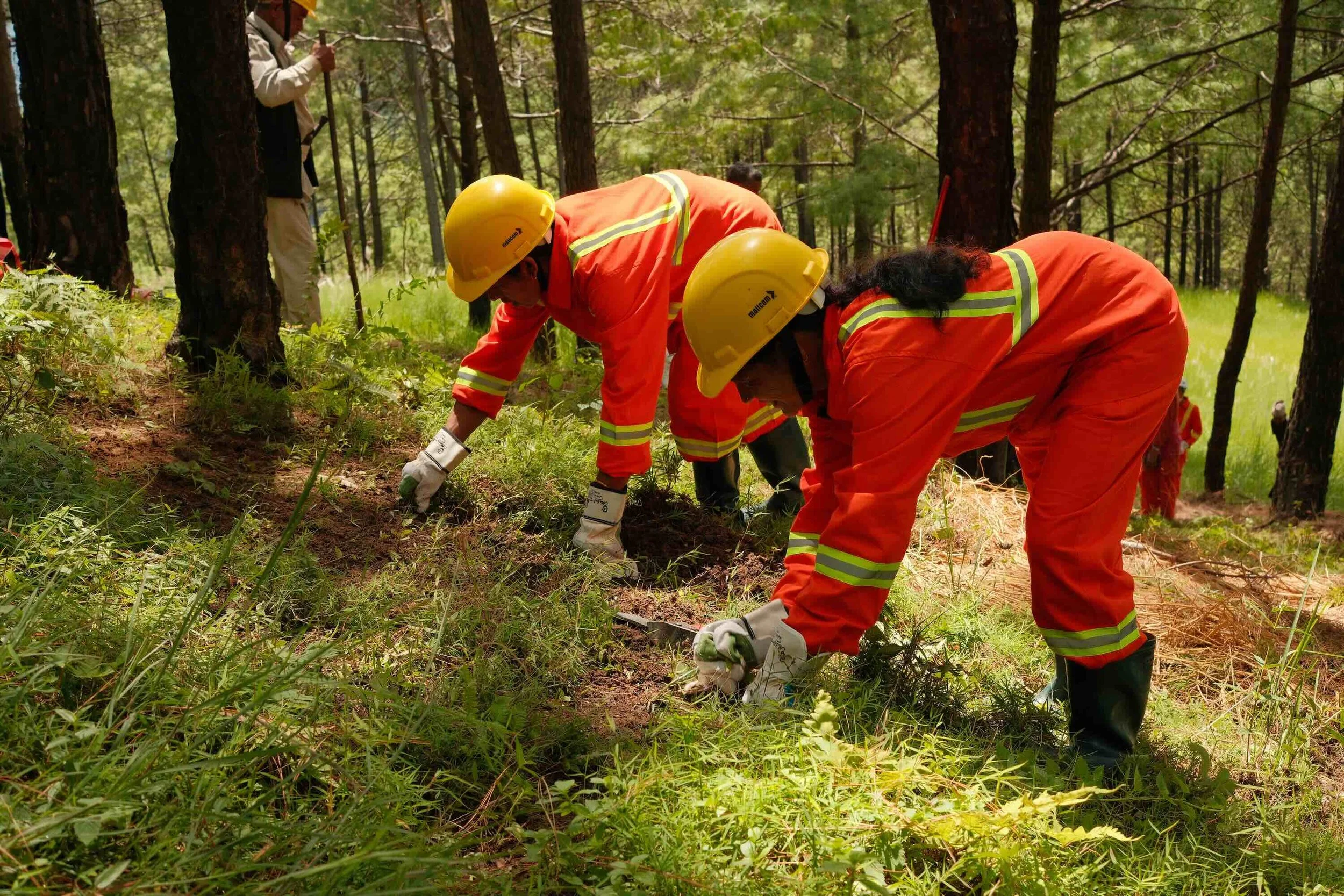
During training sessions, Community Forest User Groups learn techniques like creating fire lines to stop the spread of fire.
After more than a year of training and engagement and the supply of equipment and PPE, the Banjhe Kapase Community Forest User Group now feels equipped to carry out these activities independently. Together, they have identified high-risk fire zones, constructed more than 600 metres of fire line and carried out extensive fuel load removal activities.
“What makes me happiest is seeing the confidence among local people now. Earlier, we depended completely on outside support, but now many of us are capable of handling activities on our own. Even our executive committee has become active again. Now, we sit together every month and discuss the condition of our forest and community.”
“I often spend my free time in the forest now. Not because someone tells me to, but because I feel responsible for protecting it. Today, our community is more aware, more united and more prepared. We still know forest fires cannot always be predicted, but now people have the knowledge, skills and confidence to respond safely and protect the forest together.“
Our environmental programs in Nepal is funded by generous Australian Himalayan Foundation donors.
Read more about our Environmental Programs.