The heart of the classroom: Teacher training is transforming schools in Nepal
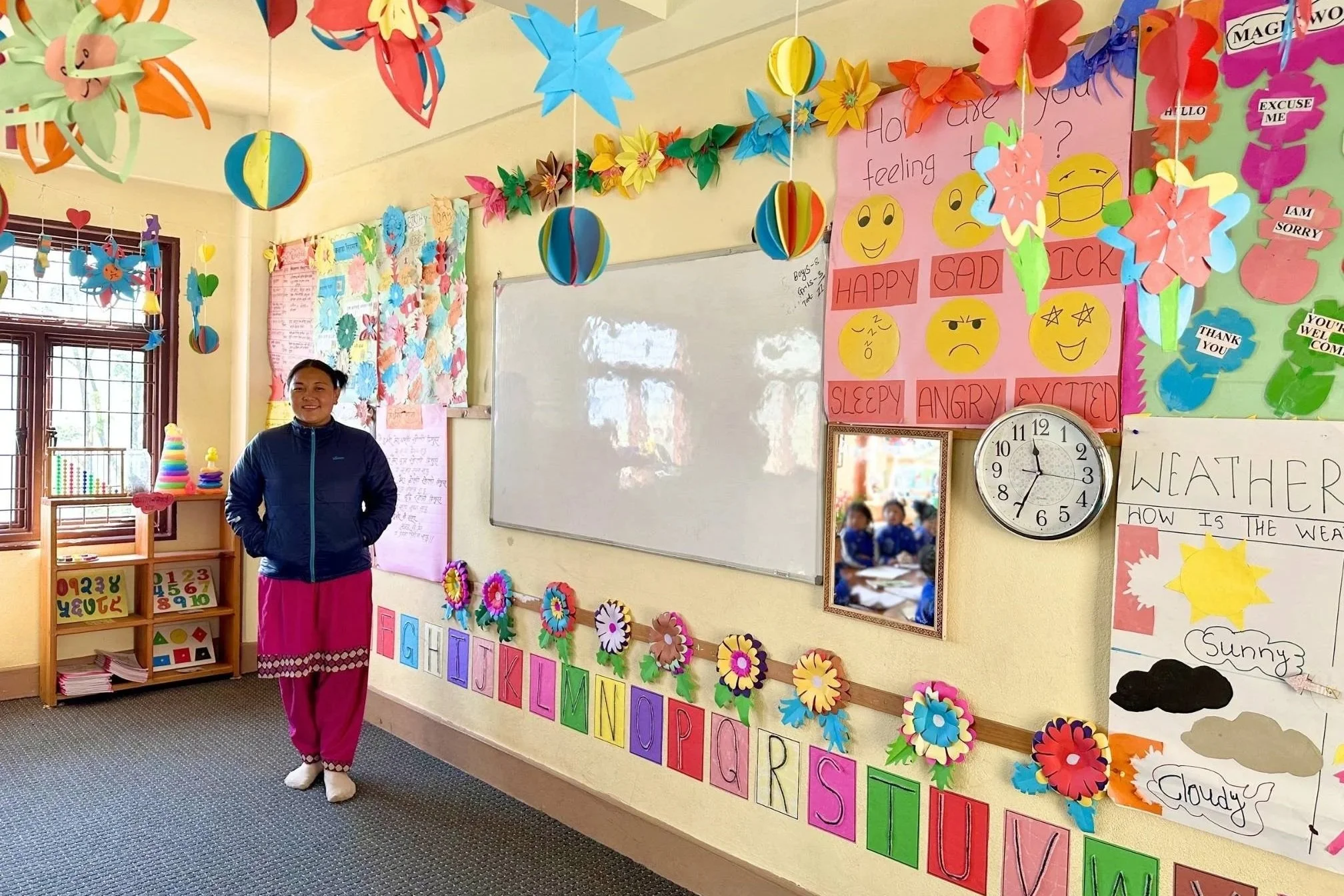
Early childhood educator Maya in her classroom.
Imagine being a teacher standing in front of a class of restless young students. The room is bare, uninviting and you have a little more than a textbook to guide you. You are committed to helping your students learn, but with limited access to training, teaching materials and ongoing support, keeping them engaged can be a constant challenge. For many teachers in remote parts of Nepal, this has long been the reality. Distance, limited resources and few professional development opportunities create real barriers to delivering child-friendly, inclusive education.
For over 20 years, the Australian Himalayan Foundation’s education program has been working to change that. Today, teachers are gaining the skills and receiving the support they need to create classrooms that respond to the needs of their students. The change is reflected not just in how teachers teach, but in how children learn. To highlight this impact, we have compiled a few stories from four incredible teachers working in the lower Solukhumbu. Meet Maya, Min, Devi and Bikram.
Maya - Early Childhood Education Teacher, Shree Kunku Secondary School
For Maya Devi Rai, leading a class of young children once felt like an overwhelming task. Without proper pedagogical training, effectively delivering lessons for her classes of three year olds was a struggle. “I was completely blind on how to teach small children.” she says.
After participating in a teacher training program, Maya began to see her classroom differently. Instead of starting with rigid lessons, she now begins by asking her students what they want to do. Their days usually start with drawing, singing or dancing, helping the children engage before gradually guiding them into reading and more structured lessons.
Maya also worked to transform her classroom into a bright, inviting space, with learning corners and handmade materials decorating the classroom, encouraging the children to physically interact and contribute in this vibrant learning space.
“If I am absent, the children are sad.” she explains. “The teacher training program has also meant the parents have confidence in the education their children are getting.”
Maya’s training extends beyond her own classroom. She actively shares what she has learned with other teachers, encouraging them to adopt similar approaches, helping to raise the overall quality of teaching across the school.
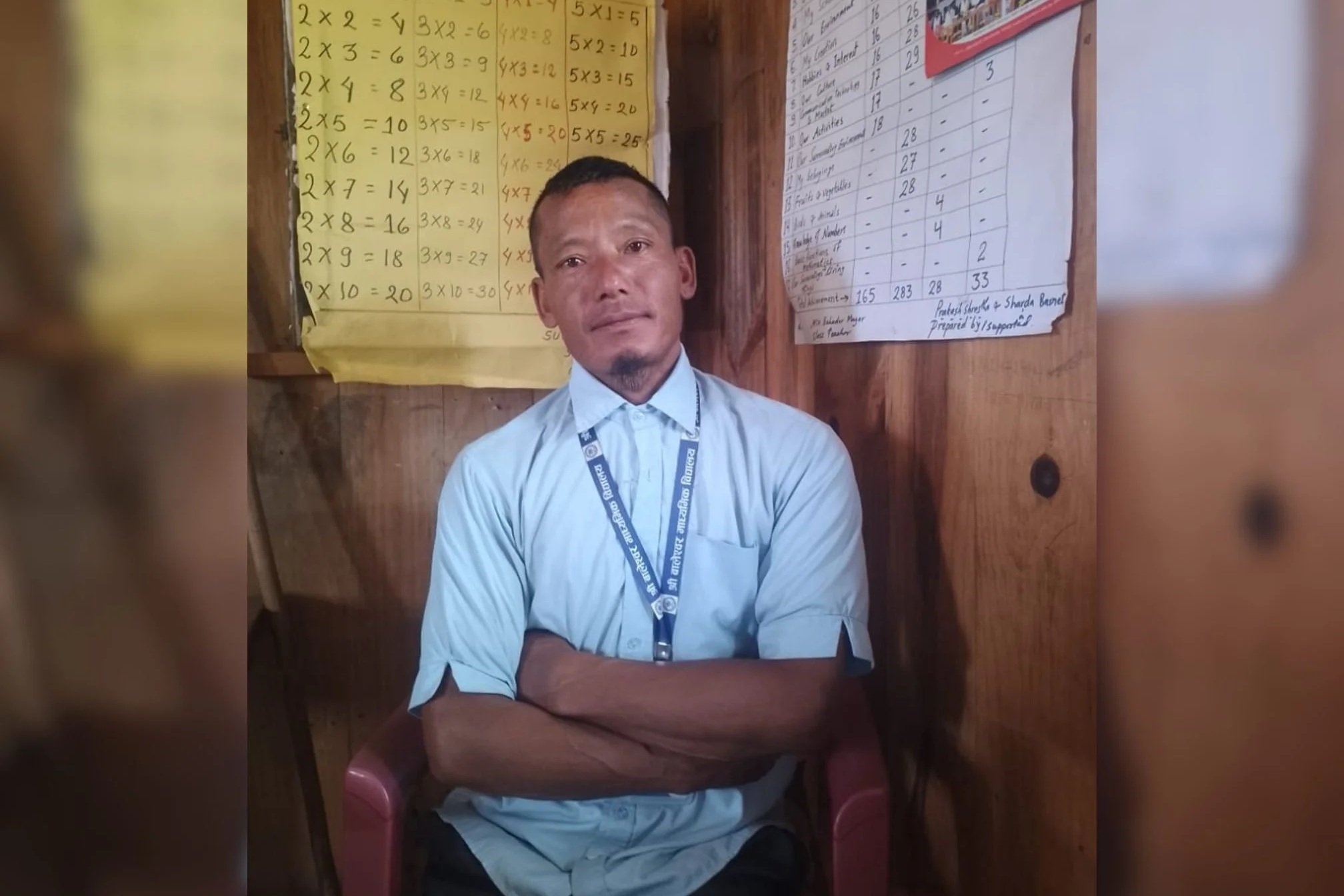
Second grade teacher Min in his classroom
Min - Grade 2 Teacher, Baleshwor Secondary School
Grade 2 Teacher Min Bahadur Magar was born in a remote part of Solukhumbu and contracted polio as an infant, leaving his right leg permanently paralysed. From a young age, he faced significant physical challenges just to attend school, often walking long distances on difficult terrain. Despite these obstacles, he was determined to continue his education.
“Growing up, I didn’t see myself as different, but the world around me did.”
His experience shaped his understanding of the barriers some children face in accessing learning and inspired him to become a teacher, ensuring that every child could have the opportunities he fought to reach.
After years of teaching with limited resources, Min was selected to participate in the teacher training program.
“When I heard about the training, I almost didn’t believe it,” he admits. “As a teacher with a disability, opportunities like this were rare.”
The training renewed Min’s sense of purpose. For the first time, Min learned modern frameworks which reinforced his intuition of using song, dance and creative lessons to help students who struggled with rote learning.
“Before, I knew creative teaching was possible, but I lacked the tools. This training gave me wings.”
With new skills in lesson planning, student engagement, and the use of locally-made teaching materials, he shifted from traditional lecture-style teaching to interactive, hands-on approaches.
“I once taught multiplication through a folk song. Years later, former students still sing it back to me! The biggest change is my students now love learning. Even the shy ones participate.”
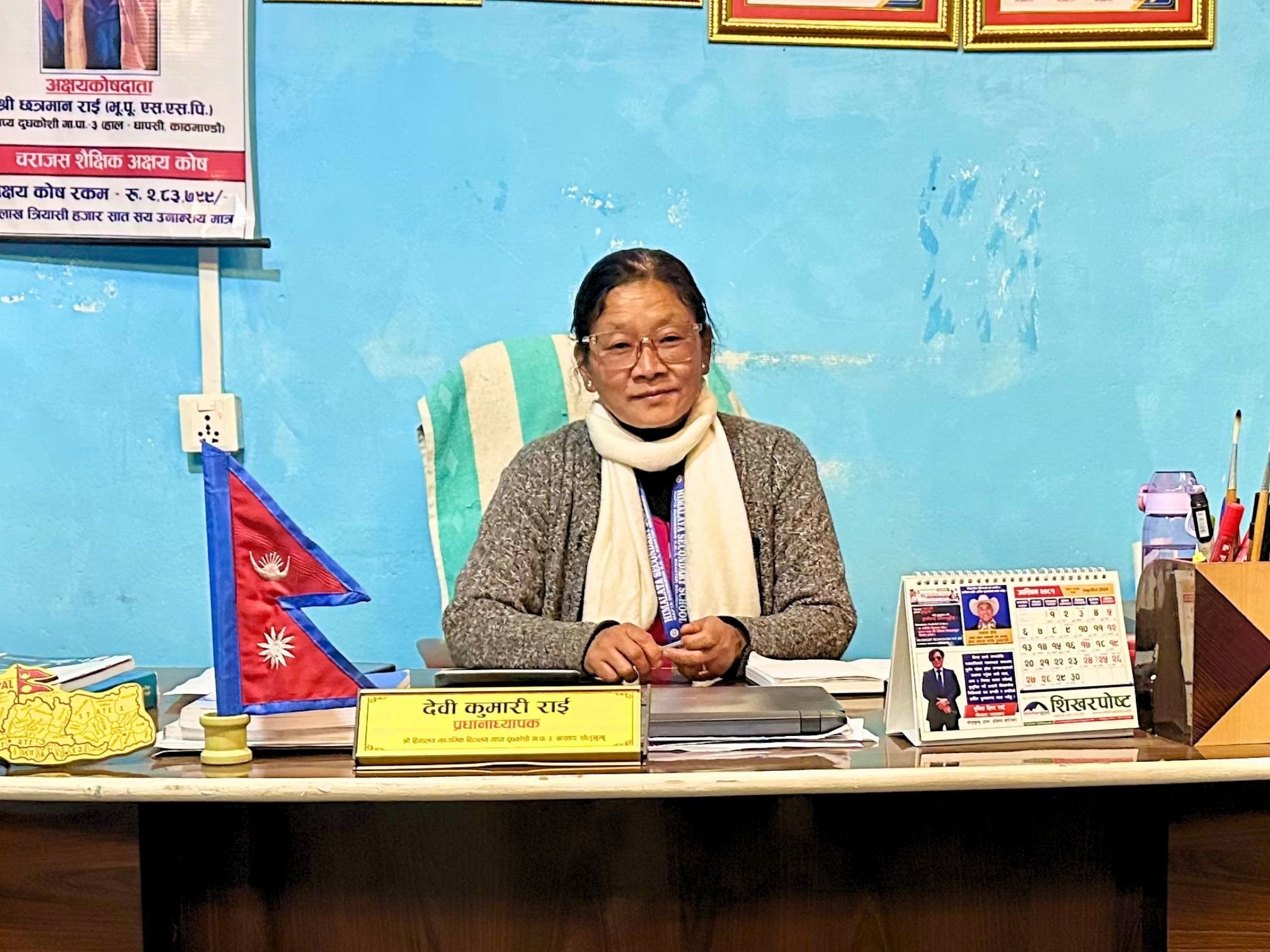
Head teacher Devi at her desk at Himalaya Secondary School
Devi - Head Teacher, Himalaya Secondary School
As Head Teacher (Principal), Devi Kumari Rai plays a critical role in ensuring improvements through teacher training are sustained across her school.
“The training was really beneficial for me,” she says. “It helped me learn new skills, knowledge and teaching methods.”
With over ten years’ experience at the school and five years as the Head Teacher, Devi focuses on strengthening teaching practices across her team. Lesson planning, classroom observation and alignment with national standards are key priorities, ensuring that teachers move beyond informal approaches and deliver structured, student-centred lessons.
Devi’s leadership also emphasizes inclusion. Students with disabilities are supported with relevant materials and accessible facilities and children from minority backgrounds receive extra encouragement and financial assistance when needed. The result is a noticeable shift. More students, particularly girls, are now completing their education through to Grade 12 and students are also now more actively participating in school life. Through the school’s ‘Child Club’, students organise activities, care for their environment and raise issues that affect them. This kind of social inclusion of student’s needs marks a shift in attitudes for local communities and school management to adopt a more child-centred approach to education.
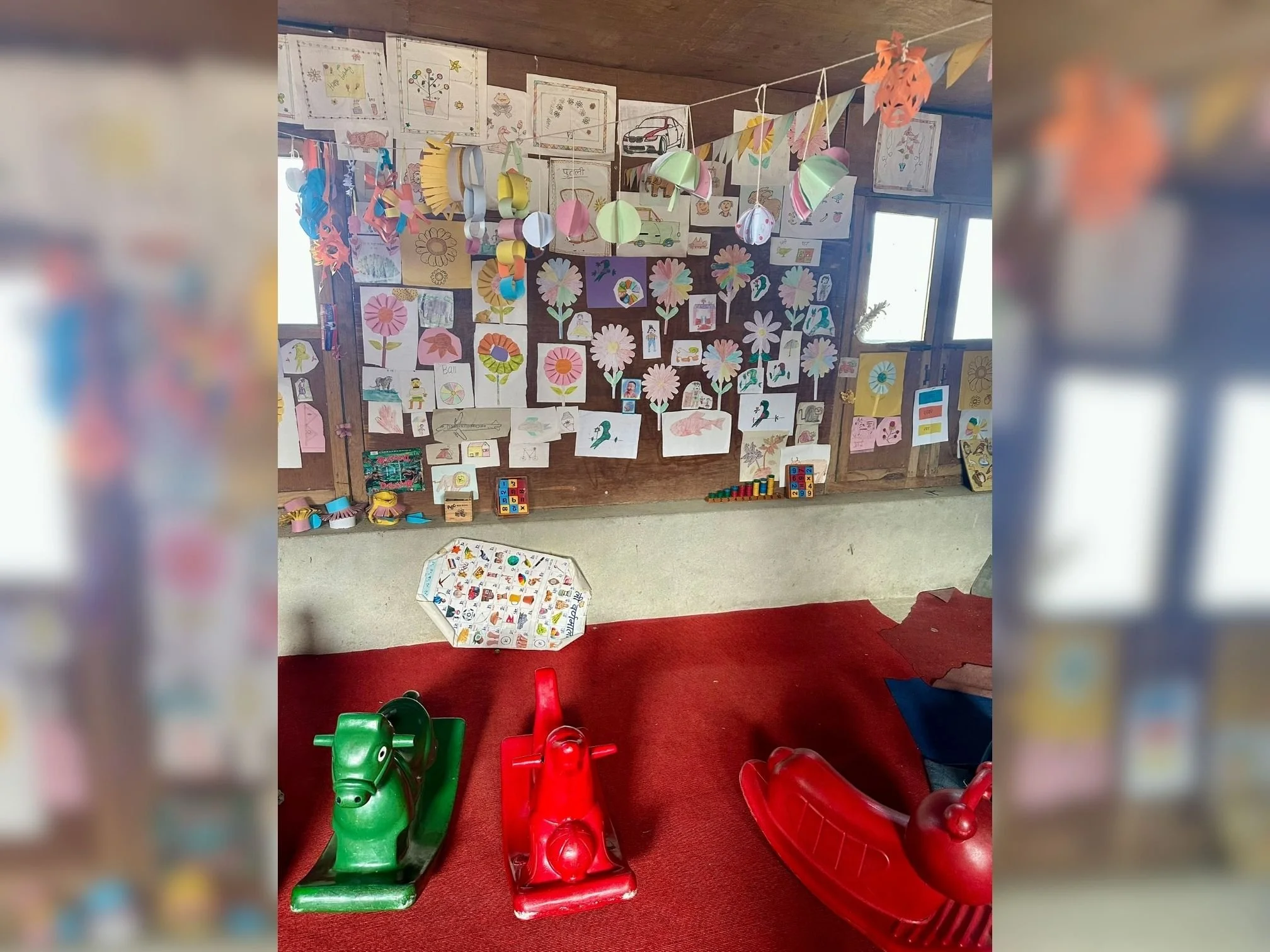
A decorated early childhood classroom at Kalika Basic School.
Bikram - Head Teacher, Kalika Basic School
Fellow Head Teacher (Principal) Bikram Bahadur Rokaya has also seen the positive impact from the teacher training program at every level of his school. Before the program began, the school faced significant challenges with limited teaching materials, a reliance on traditional teaching methods, low attendance and weak interaction between the school and the wider community.
Since 2023, targeted support has focused on both teacher development and the learning environment. Classrooms have been reorganised into child-friendly spaces with proper seating, carpets and learning corners. Teachers now use lesson plans, student evaluation tools and continuous assessment methods to guide their teaching.
Student attendance and learning outcomes have both improved, with the students average grades increasing in just one year. Teachers are also reporting greater confidence and consistency, thanks to ongoing support and monitoring.
“This project has shown us that quality education is possible, even in rural settings, when teachers receive continuous support and mentoring.”
Building skills, shaping futures
When teachers are equipped with the right skills, resources and mentoring, classrooms become places where students feel included and motivated to learn. And when kids have the opportunity to thrive and are equipped for a changing world, they don’t just transform their own lives, they can change the future of entire communities.
Our education program in Nepal is funded by generous Australian Himalayan Foundation donors and the Australian Government through the Australian NGO Cooperation Program (ANCP).
Donate today to help and be part of creating lasting change through education in remote communities of Nepal.
Read more about our Education Programs.